

Description
Overview of Anti-islanding protection
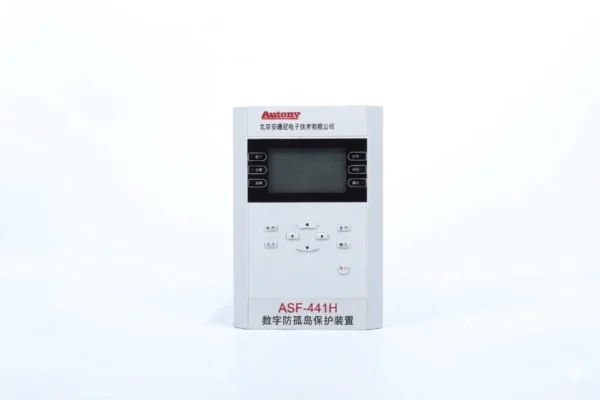
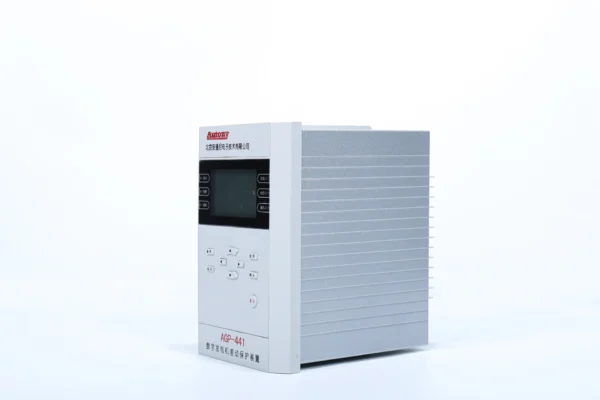
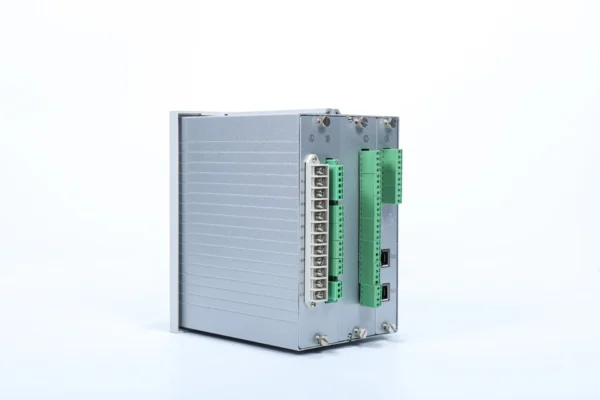
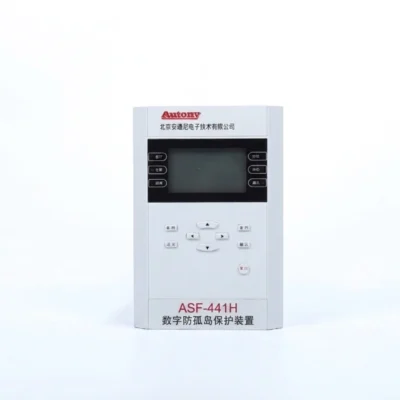
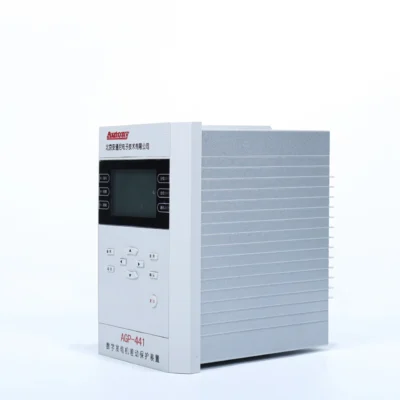
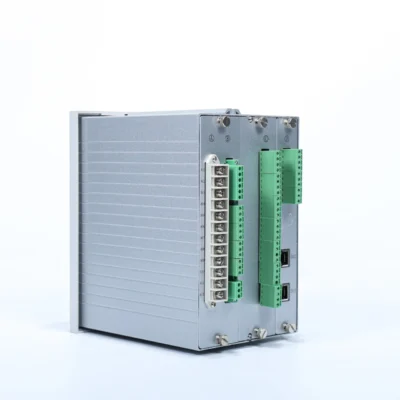
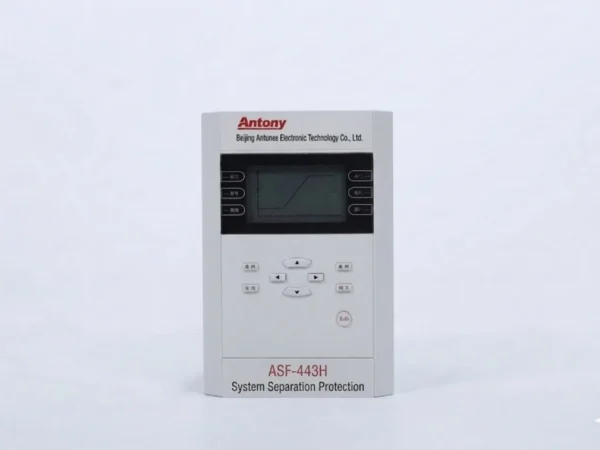
- The ASF-441H Anti-Islanding Protection Device is a new-generation protection device independently developed and manufactured by our company.
- It is designed to disconnect specified power equipment (such as transmission lines or unit transformers) when the system frequency or voltage drops, thereby ensuring the safe and stable operation of the power grid (including low-frequency/low-voltage disconnection, high-frequency/low-voltage disconnection, and rapid startup of standby units under low-frequency/low-voltage conditions).
- It features functions such as low-frequency detection, low-voltage detection, over-frequency detection, over-voltage detection, and reverse power detection.
Protection Functions (with ANSI Code)
- Three-stage compound voltage blocking directional overcurrent protection — ANSI 51V/67
- Three-round underfrequency protection: slip blocking and undervoltage blocking can be enabled or disabled; underfrequency load shedding output supports trip or alarm selection — ANSI 81U
- Three-round undervoltage load shedding function — ANSI 27
- Overfrequency protection: undervoltage blocking can be enabled or disabled; overfrequency load shedding output supports trip or alarm selection — ANSI 81O
- Overvoltage protection — ANSI 59
- Reverse power protection — ANSI 32R
- Reverse power recovery function
- Out-of-step splitting protection — ANSI 78
- Loss of voltage protection — ANSI 27
Setting Table
| No. | Description | Setting Range | Conversion Factor for Upload & Download |
|---|---|---|---|
| 1 | Control Word 1 | 0000~FFFF | ×1 |
| 2 | Control Word 2 | 0000~FFFF | ×1 |
| 3 | Control Word 3 | 0000~FFFF | ×1 |
| 4 | Low Frequency Start Delay | 0.1~120.00s | ×100 |
| 5 | Low Frequency Stage 1 Protection Delay | 0.1~120.00s | ×100 |
| 6 | Low Frequency Stage 2 Protection Delay | 0.1~120.00s | ×100 |
| 7 | Low Frequency Stage 3 Protection Delay | 0.1~120.00s | ×100 |
| 8 | Low Frequency Acceleration Delay | 0.1~120.00s | ×100 |
| 9 | Under-voltage Start Delay | 0.1~120.00s | ×100 |
| 10 | Under-voltage Stage 1 Protection Delay | 0.1~120.00s | ×100 |
| 11 | Under-voltage Stage 2 Protection Delay | 0.1~120.00s | ×100 |
| 12 | Under-voltage Stage 3 Protection Delay | 0.1~120.00s | ×100 |
| 13 | Under-voltage Acceleration Delay | 0.1~120.00s | ×100 |
| 14 | Overcurrent Stage 1 Delay | 0~120.00s | ×100 |
| 15 | Overcurrent Stage 2 Delay | 0~120.00s | ×100 |
| 16 | Overcurrent Stage 3 Delay | 0~120.00s | ×100 |
| 17 | Over-voltage Delay | 0.1~120.00s | ×100 |
| 18 | Over-frequency Delay (Stage 1) | 0.1~120.00s | ×100 |
| 19 | Reverse Power Delay | 0.1~120.00s | ×100 |
| 20 | Over-frequency Delay (Stage 2) | – | ×100 |
| 21 | Low Frequency Start Setting | 45.00~50.00Hz | ×100 |
| 22 | Low Frequency Stage 1 Protection Setting | 45.00~50.00Hz | ×100 |
| 23 | Low Frequency Stage 2 Protection Setting | 45.00~50.00Hz | ×100 |
| 24 | Low Frequency Stage 3 Protection Setting | 45.00~50.00Hz | ×100 |
| 25 | Frequency Change Rate 1 (Acceleration Setting) df/dt1 | 0.00Hz/s~20.00Hz/s | ×100 |
| 26 | Frequency Change Rate 2 (Blocking Setting) df/dt2 | 0.00Hz/s~20.00Hz/s | ×100 |
| 27 | Under-voltage Start Setting | 0.4~120.00V | ×100 |
| 28 | Under-voltage Stage 1 Protection Setting | 0.4~120.00V | ×100 |
| 29 | Under-voltage Stage 2 Protection Setting | 0.4~120.00V | ×100 |
| 30 | Under-voltage Stage 3 Protection Setting | 0.4~120.00V | ×100 |
| 31 | Under-voltage Blocking Setting | 0.4~120.00V | ×100 |
| 32 | Voltage Difference Abnormality Setting | 0.4~120.00V | ×100 |
| 33 | Loss-of-synchronism Voltage Setting | 0.4~120.00V | ×100 |
| 34 | Voltage Change Rate 1 (Acceleration Setting) dv/dt1 | 0.00V/s~200.00V/s | ×100 |
| 35 | Voltage Change Rate 2 (Blocking Setting) dv/dt2 | 0.00V/s~200.00V/s | ×100 |
| 36 | Overcurrent Stage 1 Setting | – | ×100 |
| 37 | Overcurrent Stage 2 Setting | – | ×100 |
| 38 | Overcurrent Stage 3 Setting | – | ×100 |
| 39 | Over-voltage Setting | – | ×100 |
| 40 | Over-frequency Setting (Stage 1) | – | ×100 |
| 41 | Reverse Power Setting | – | ×100 |
| 42 | Rated Current | – | ×100 |
| 43 | Negative Sequence Voltage Setting | – | ×100 |
| 44 | Under-voltage Setting | – | ×100 |
| 45 | Reverse Power Reset Setting | – | ×100 |
| 46 | Reverse Power Reset Time | – | ×100 |
| 47 | Over-frequency Setting (Stage 2) | – | ×100 |
| 48 | Oscillation Count | 0-20 | ×100 |
| 49~54 | Reserved | – | – |
| 55 | Voltage Loss Setting | 0.4~120.00V | – |
| 56 | Voltage Loss Delay | 0.1~120.00s | – |
| 57~64 | Reserved | – | – |
| 65 | CRC Check | – | – |
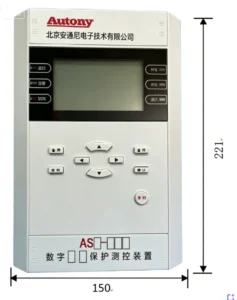
Outline and Installation Dimensions
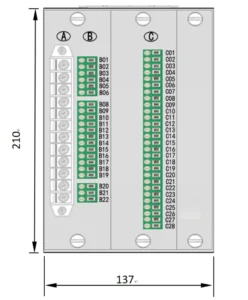
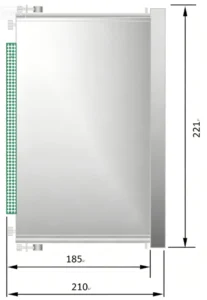
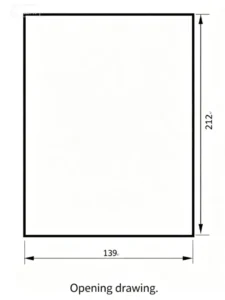
FAQ
Q:What is the purpose of an anti-islanding relay?
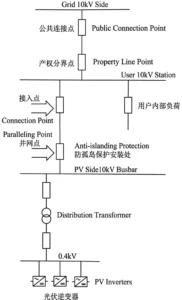
A:Due to grid or natural factors, the local power system is likely to operate in island mode, posing risks to equipment and the grid. In solar power projects, the anti islanding protection solar inverter serves as the primary defense with inherent anti-islanding capabilities.
Though inverters (including the anti islanding protection solar inverter) and wind power systems have basic anti-islanding functions, installing an anti islanding protection relay at grid connection points provides reliable backup to enhance safety.
Note that anti virus protection installation long island is irrelevant to grid anti-islanding protection. When islanding occurs, the anti islanding protection relay and anti islanding protection solar inverter form a dual backup to quickly disconnect the islanded power source and eliminate risks.
Q:What is anti-islanding protection used for?
A:Disconnect distributed generation from isolated local grid to prevent out-of-supply safety risk.
Q:Detection modes equipped?
A:Both passive detection (U/f abnormal) and active disturbance detection are integrated.
Q:Typical applicable equipment?
A:Grid-connected PV inverter, small wind turbine and distributed cogeneration unit.
xiao zhang –
This anti-islanding protection adopts combined passive & active detection algorithm to rapidly identify island operation of distributed generation. Fast response speed, flexible threshold configuration and multiple communication interfaces make it widely applied for photovoltaic and wind power grid-connected projects globally.
Jack –
Password protection prevents unauthorized setting changes — very secure.