

Description
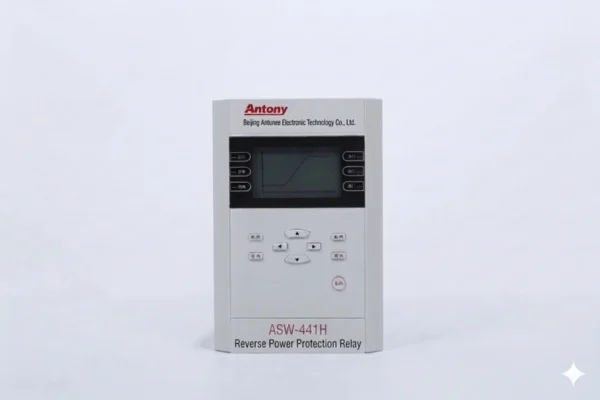
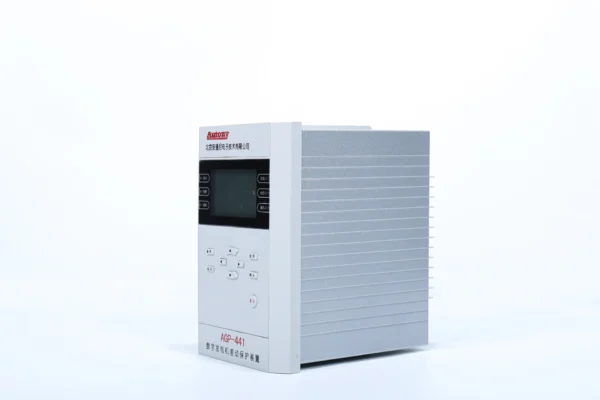
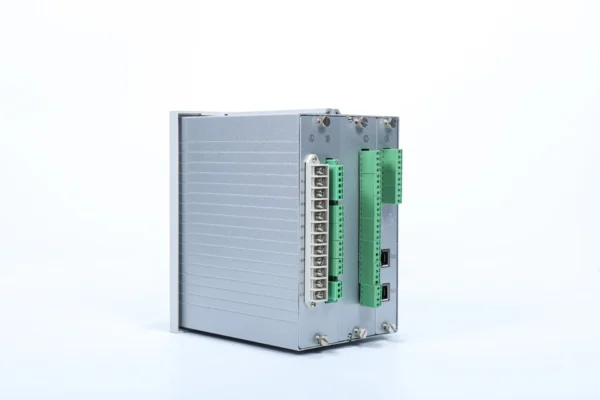
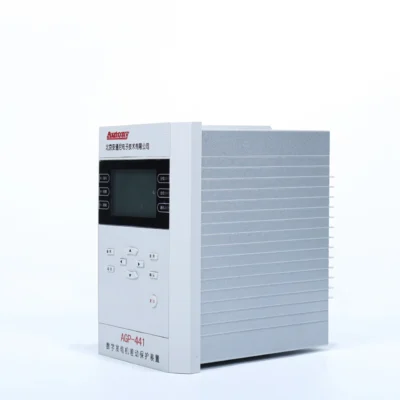
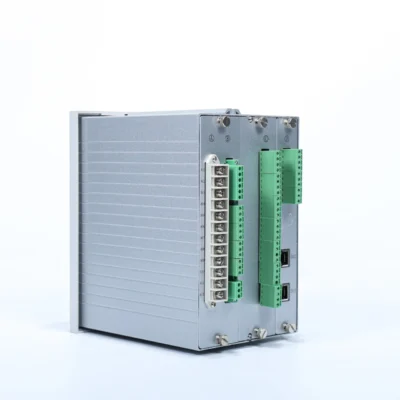
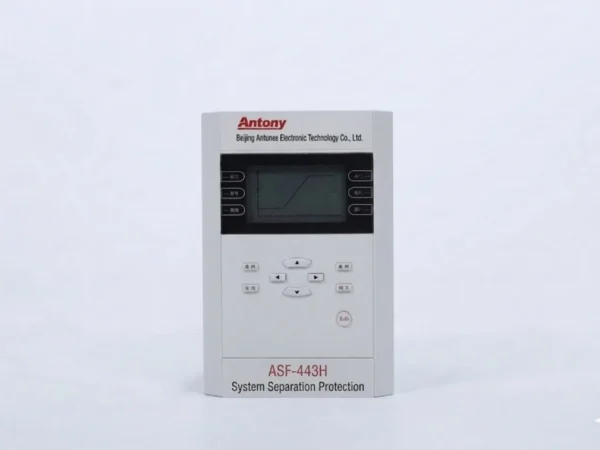
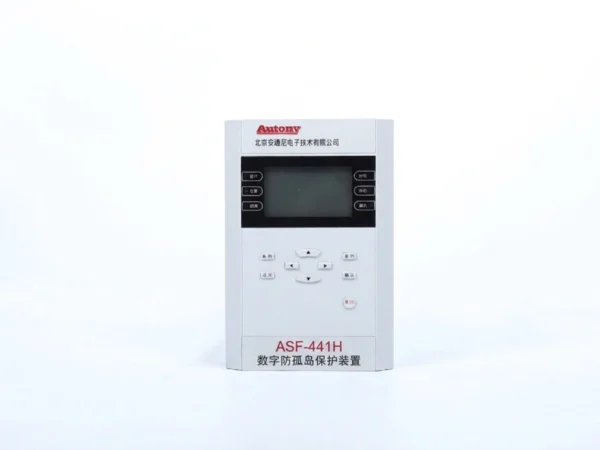
Overview of Reverse Power Protection Relay
- For photovoltaic power plants adopting a non-reversible grid connection design, a Reverse Power Protection Relay shall be installed at the grid connection point.
- This system adopts a dedicated microprocessor unit and control circuitry to real-time monitor the low-voltage side of distribution transformers. Integrated with reverse power relay protection, it implements precise control for clean power supply and ensures fast protection response.
Reverse Power Protection Relay Functions
- Three-stage current protection
- Instantaneous overcurrent
- Definite-time instantaneous overcurrent
- Undervoltage blocking
- Directional blocking
- individually enabled or disabled
- Six-stage time-limit
- reverse power protection
- PT fuse failure detection
Key Technical Specifications of Reverse Power Protection Relays
Rated Specifications
- Power Supply: AC 220 V or AC 110 V (specify when ordering)
- AC Voltage: Phase voltage 220 V, line voltage 380 V
- AC Current: 5 A or 1 A (specify when ordering)
- Frequency: 50 Hz
Power consumption:
- DC circuit: ≤15 W
- AC voltage circuit: < 0.5 VA per phase
- AC current circuit: < 1 VA per phase (IN = 5 A) or < 0.5 VA per phase (IN = 1 A)
Standard atmospheric conditions
Standard atmospheric conditions
- Operating conditions: –20°C to +70°C, relative humidity 5% to 95% (no condensation or freezing inside the unit);
- Storage: –30°C to +80°C. When no excitation is applied at the extreme temperature limits, the device shall not undergo irreversible changes, and it shall function normally once the temperature returns to normal. Packaged devices shall be stored at an atmospheric pressure of 80–110 kPa (equivalent to an altitude of 2 km or less) and a relative humidity of no more than 85%.
- Transportation: -25°C to +70°C, relative humidity not exceeding 85%;
Other requirements
- The air around the equipment must not contain any acidic, alkaline, corrosive, or explosive substances.
Overview of Key Features
- The ASW-441H reverse power monitoring device is equipped with reverse power trip and reverse power recovery functions, as follows:
- Six-time-delay graded trip based on reverse power; (any given time delay can be linked via hardware to a pair of output contacts C01–C02)
- The 1st time delay trips 1DL; the 2nd through 5th time delays all trip the corresponding switches after the preceding time delay has tripped; the 6th time delay trips 6DL after the 5th time delay has tripped, and it is also possible to select whether to trip the 10kV switch.
- Six-time-delay graded closing based on power restoration.Time step 1 closes 1DL; time steps 2–6 close the corresponding switches after the previous time step has closed.
- The 10kV switch must be closed manually.
- Measurements: U, I, P, Q, cosΦ, F.
Reverse Power Flow Protection Relay Setting Sheet
| No. | Parameter Description | Setting Range | Upload/Download Conversion Factor |
|---|---|---|---|
| 0 | Control Word 0 | 0000~FFFF | — |
| 1 | Control Word 1 | 0000~FFFF | — |
| 2 | Control Word 2 | 0000~FFFF | — |
| 3 | 1st Stage Reverse Power Protection Delay | 0.1–999.9 s | ×100 |
| 4 | 2nd Stage Reverse Power Protection Delay | 0.1–999.9 s | ×100 |
| 5 | 3rd Stage Reverse Power Protection Delay | 0.1–999.9 s | ×100 |
| 6 | 4th Stage Reverse Power Protection Delay | 0.1–999.9 s | ×100 |
| 7 | 1st Circuit Power Recovery Closing Delay | 1.0–999.9 s | ×100 |
| 8 | 2nd Circuit Power Recovery Closing Delay | 1.0–999.9 s | ×100 |
| 9 | 3rd Circuit Power Recovery Closing Delay | 1.0–999.9 s | ×100 |
| 10 | 4th Circuit Power Recovery Closing Delay | 1.0–999.9 s | ×100 |
| 11 | Overload Delay | 0.1–120.00 s | ×100 |
| 12 | Under Voltage Delay | 0.1–120.00 s | ×100 |
| 13 | Over Voltage Delay | 0.1–120.00 s | ×100 |
| 25 | Reverse Power Protection Setting Value | — | ×100 |
| 26 | 1st Circuit Power Recovery Closing Setting | 2–2000 W | ×100 |
| 27 | 2nd Circuit Power Recovery Closing Setting | 2–2000 W | ×100 |
| 28 | 3rd Circuit Power Recovery Closing Setting | 2–2000 W | ×100 |
| 29 | 4th Circuit Power Recovery Closing Setting | 2–2000 W | ×100 |
| 30 | Overload Setting Value | 0.40~99.99 A | ×100 |
| 31 | Current Pick-up Setting | 0.40~99.99 A | ×100 |
| 41 | Under Voltage Threshold | 20.00~120.00 V | — |
| 42 | Over Voltage Threshold | 20.00~120.00 V | — |
| 47 | Voltage Transformer Ratio | — | — |
| 48 | Current Transformer Ratio | — | — |
| 49 | Setting Check Code | — | — |
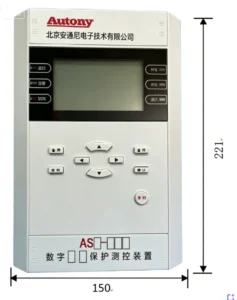
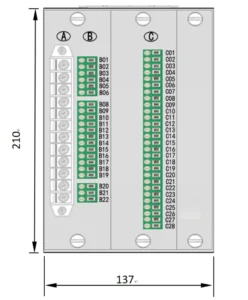
Outline and Installation Dimensions
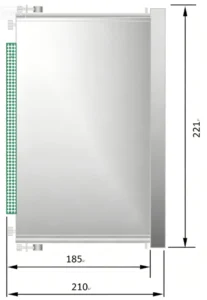
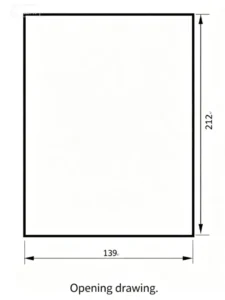
FAQ
Q1:What is reverse power protection used for?
A:It prevents generator damage caused by reverse power feeding back to grid, mainly applied for synchronous generator protection.
Q2:ANSI code for reverse power protection?
A:Standard ANSI code is 32.
Q3:What causes reverse power fault?
A:Prime mover failure, turbine stop or improper breaker closing leads generator to run as motor.
Q4:Available communication options?
A:Supports RS485, Ethernet, IEC103 for remote setting and fault record upload.
Q5:Can trip and alarm be set separately?
A:Yes, users configure independent threshold for warning and breaker trip.
xiao zhang –
Reliable reverse power protection relay (ANSI 32), sensitive reverse power detection, widely used for generator anti-islanding protection, fit global power station projects.
Jack –
No nuisance tripping during motor starting or transformer inrush.