

-
Blake.Chu sales consultant
-
Email: 113217160@qq.com
-
Phone/WhatsApp: +86 17774546154

What is safety barrier system for pharmaceutical equipment
Preface
During pharmaceutical production, powder materials harm workers’ health and pollute drugs to ruin product quality. safety barrier system serve as key protective facilities to solve these troubles. Many industry workers do not fully know which production steps need containment, what kinds of equipment to pick, and how to design them. This article explains all relevant knowledge in simple words. It helps factories run standard production and keep workers safe while guaranteeing drug quality.
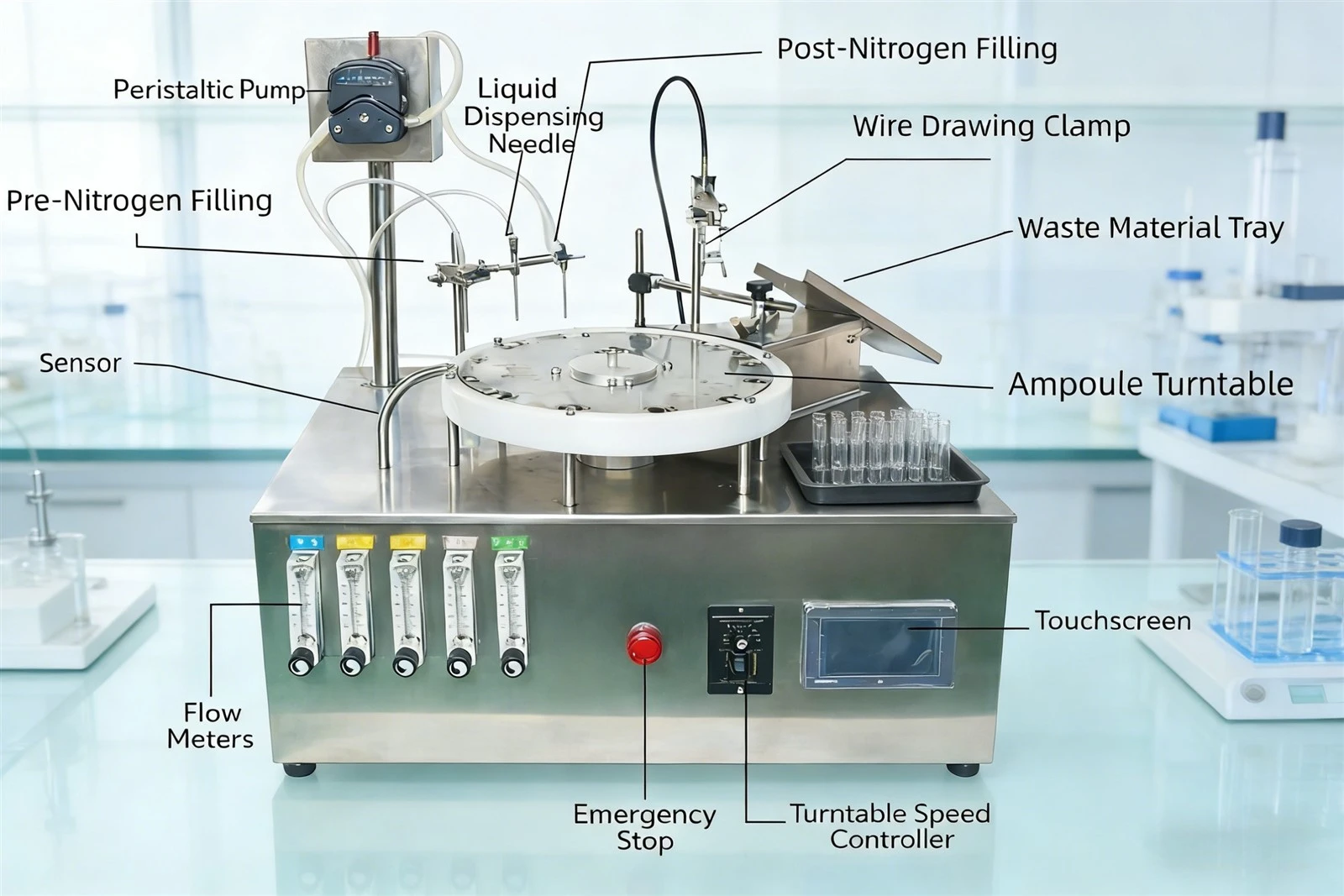
1. Why Do Factories Need Containment?
Active drug ingredients produced and used in drug plants bring serious harm to people and the environment. Factories must take measures to protect all staff, especially on-site workers, from these dangerous substances. Meanwhile, factories also need methods to stop drugs from being contaminated and meet strict standards for product quality and purity.
Containment refers to all mechanical equipment and systems that block harmful substances from spreading. It achieves the two key goals above at the same time.
2. Production Processes That Require Containment
Pharmaceutical manufacturing belongs to fine chemical industries and mostly uses batch operation. Materials frequently move into, out of and between different machines. Traditional open operation modes let workers easily touch harmful dust, which creates high health risks.
After closed equipment gradually replaces open machines, worker safety gets much better. safety barrier system play an essential role in this shift.
Compared with liquid and gas materials, solid powder is much harder to fully contain, and this problem stands out most in pharmaceutical workshops. Typical steps needing containment include feeding, batching, drying and crushing, filling, powder blending, granulation, sieving and powder sampling.
3. Common Types of safety barrier system and Their Performance
Common safety barrier systems (containment devices) have five categories: airflow control, clean disconnect couplings, sealed liners, isolators and transfer gear with various sub-models. Local exhaust hoods are airflow-type units. Exact unified test data is unavailable due to varied processes, makers and limited public reports, yet we have known performance ranges: hoods hit 100–1000 μg/m³ at best and over 1000 μg/m³ at worst, while isolators, the top safety barrier system, achieve 0.1 μg/m³ for excellent dust blocking.
4. How to Select and Design safety barrier system
Many public guides teach people to choose and design containment gear. The most well-known standard is the pyramid guide from the book Containment Systems: A Design Guide published by IChemE (Institution of Chemical Engineers).
This guide ranks exposure risks based on powder volume, dust levels during operation and exposure time. It then offers engineering control plans according to risk ranks and safe exposure limits of materials.
However, many factory operators find six obvious drawbacks when using this guide and similar documents:
- Its suggested control plans are too strict and cost too much money to put into real use.
- More containment types exist than the examples listed in the book, and multiple containment technologies can work together.
- New and improved containment tools keep appearing while these guides are being written or released.
- People who write these guides tend to recommend machines they know well or products from their own companies.
- Most end-user companies keep their containment test data secret, so factories cannot compare different devices easily.
- One containment device’s actual performance changes with different production processes and manufacturers.
In reality, picking and designing containment systems requires considering many factors. People mainly learn to judge these factors through years of work experience. For most factories, asking professional industry experts is the easiest and most effective solution.
Conclusion
safety barrier system are vital protective tools in drug workshops to protect worker health and drug quality. All powder processing steps must match proper containment equipment. Different devices have huge gaps in protective ability, so you cannot pick them blindly.
All industry guides are only basic references and cannot be copied directly for real design and selection. Factories should fully analyze their own raw materials and production processes. They may ask professional experts for help and adopt matched containment solutions to maintain safe and rule-compliant production for a long time.
Related Posts

GMP Compliant Design
Comply with GMP standards, featuring easy-to-clean surfaces and validation-ready documentation.
On-Time Delivery
Reliable lead times for standard and custom equipment, supporting your production launch without delays.
Professional After-Sales
Global technical support and on-site installation/training to ensure long-term stable operation.