

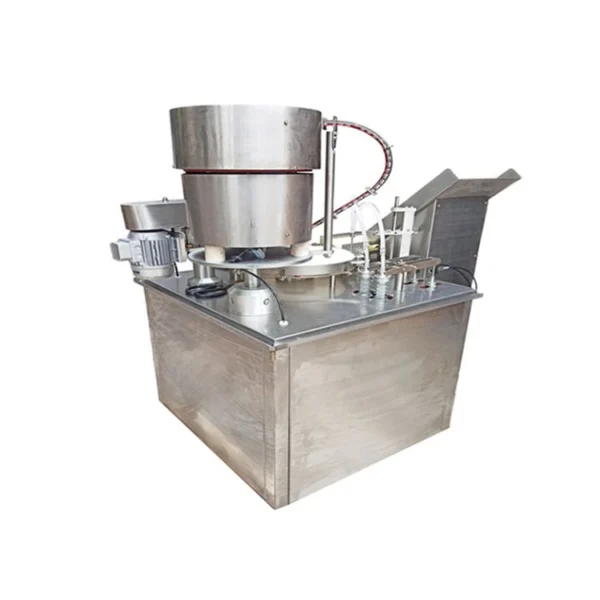
Description
Benefits of Liquid Filling Machines
-
Faster ProductionFast output is one major advantage. The machine fills containers with accurate amounts of liquid quickly. It lets you finish more finished goods and deliver orders sooner. It works especially well for mass filling tasks.
-
Cut Labor CostsAutomatic liquid filling machines greatly lower labor expenses. They need very few operators. Usually only one worker can run the machine. You do not need to hire many staff for filling work and save costs in the long run.
-
High Filling Accuracy
Automatic liquid filling machines pour precise volumes of liquid into every container. You can guarantee all finished products meet standard filling requirements, which satisfies strict industry rules. -
Support Quick Switch Between Products
You can adjust the machine easily to handle different materials. If the liquid can be pumped, this machine can fill it. Workers can switch production items without wasting much time. -
Strong Versatility
This machine fits many kinds of products, including drinks and chemical liquids. It works with containers of different sizes and shapes. It meets production demands from various industries. -
Reduce Material Waste
Liquid filling machines help you cut waste. They deliver exact liquid volume every time. You will not face troubles like overfilling or underfilling, so you lose less raw materials.
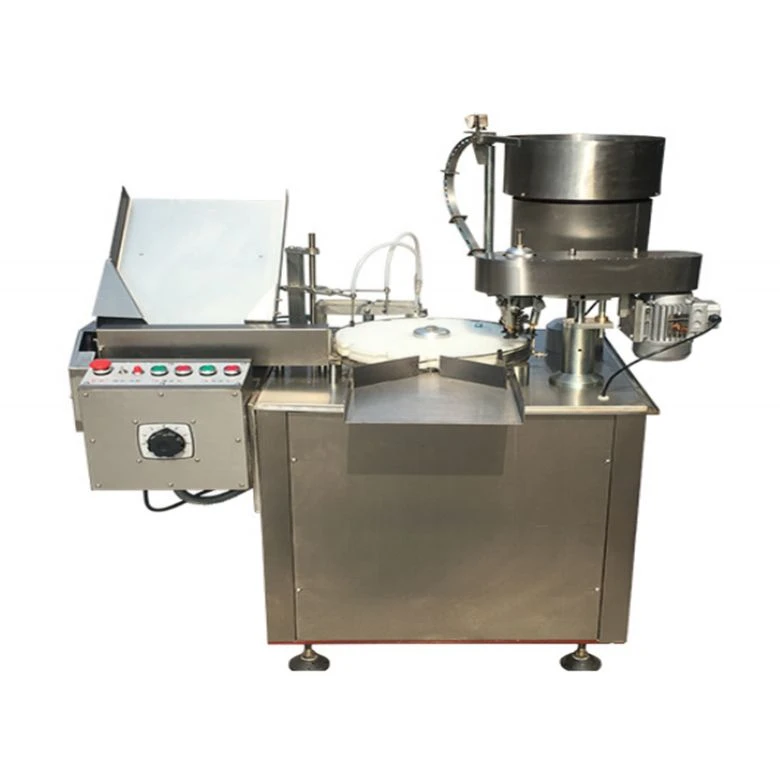
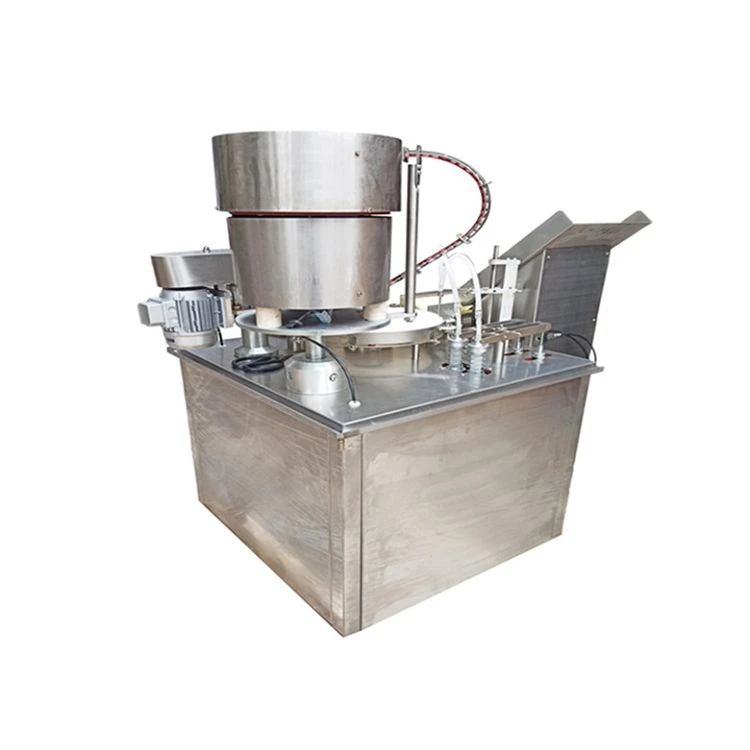
Bottle Filling Machine
Why Choose Us
- One-stop Service
We promise fast replies, competitive prices, reliable quality and complete after-sales support.
- Customer Satisfaction
We aim to provide high-quality service beyond your expectations. We cooperate closely with you and try our best to meet all your production needs.
- Competitive Pricing
We offer favorable prices without sacrificing quality. Our pricing is open and clear, with no hidden charges.
- Quality Assurance
We follow strict quality control standards. Our quality inspectors test every machine fully before delivery.
- Professional Experience
Our team has rich experience in equipment solutions. We employ skilled specialists to create excellent results for clients.
- Good Customer Service
We keep our promises on delivery time and budgets. Great customer service builds our reputation. You can feel the obvious difference by cooperating with us.
Working Principle of Liquid Filling Machines
Machines handle liquids differently according to viscosity. No matter which model you select, it fills fixed liquid volume into each container at a set speed. The number of filling nozzles decides how many containers can be filled at the same time.
- Fully Automatic Liquid Filling Machines
A conveyor belt moves empty containers to the filling station. Liquid stored in hoppers or cylinders flows into containers through filling nozzles. The filling method can be volumetric filling or quantitative filling based on machine types. We will introduce different machine models below.
- Semi-Automatic Liquid Filling Machines
- Manual Liquid Filling Machines
- Types of Liquid Filling Machines
Classified by Layout
- Rotary Liquid Filling Machine
A rotary liquid filling machine is normally larger than inline models. It can be equipped with 25, 50, 100 or more filling nozzles. It runs at extremely high speed and achieves much higher output every minute.
However, if faults happen during production, lots of containers inside the machine will be wasted. Rotary machines are harder to operate and repair than inline machines. Workers cannot fix errors rapidly during operation.
Even so, large factories favor rotary filling machines for their unmatched speed and capacity. Big companies such as Coca-Cola choose this type of equipment.
- Inline Liquid Filling Machine
As its name suggests, an inline liquid filling machine uses a conveyor line to carry containers in a straight path. It costs reasonably and is easy to adjust, so many manufacturers prefer it. It generally has 4 to 20 filling nozzles, and sometimes more to satisfy different production goals.
Factories with low or medium output usually pick inline filling machines. Operators can find problems easily during production.
When faults occur, people can stop the machine, fix problems and restart quickly. Fewer containers get wasted. Some inline models support upgrades. You can add more filling heads later to raise the capacity of your packaging line.
Classified by Filling Principle
- Vacuum Filling Machine
Vacuum filling machines use vacuum feeding and vane cell systems. They mainly handle thick liquids and pastes. Two key parts transport materials: a vane cell feeding system and a hopper with feeding devices.
A vacuum pump creates negative pressure. It pulls materials gently from the hopper into the vane cell system. When vacuum chambers move below the hopper, materials flow continuously for filling.
- Volumetric Filling Machine
- Gravity Filling Machine
Workers can set independent filling time for each nozzle to control liquid volume accurately.
Liquids flow down pipes to nozzles relying on gravity. Gravity filling machines suit thin, free-flowing liquids better instead of slow-moving thick materials.
- Piston Filling Machine
Piston filling machines fit thick, high-viscosity liquids, and they can also handle thin liquids. Thick materials cannot flow freely, so they need pushing power to enter bottles. This machine can process liquids with solid particles, such as chopped fruit and vegetable pieces.
Liquid first enters a cylinder. Then pistons push materials from the cylinder into containers below nozzles. The fixed cylinder volume guarantees accurate volumetric filling.
- Overflow Filling Machine
Overflow filling machines follow the overflow filling principle, offering another choice besides gravity volumetric filling.
Instead of pouring fixed liquid weight, this machine fills every bottle to the same liquid level, even if bottles have slight differences in internal volume. It works perfectly for transparent containers. Neat liquid levels make products look attractive on shelves.
Besides, it performs well with thin liquids and foaming materials, and controls foam during filling.
- Pump Filling Machine
Pump filling machines are ideal for thick materials. You can match suitable pumps for your liquid to get stable and efficient filling.
Users can choose pulse filling or timed filling modes. Pumps push thick materials like oil and gel. Some pumps also work well for low-viscosity liquids.
- Net Weight Filling Machine
Net weight filling machines fill liquids according to target weight set by operators. Weighing platforms track liquid weight while filling. They are perfect for large containers holding high-value liquids, such as 5-gallon buckets. Precise weighing prevents profit losses.
This machine is great for products with strict weight standards, especially goods labeled by net weight.
Differences Between Volumetric Filling Machines and Ordinary Liquid Filling Machines
Ordinary liquid filling machines fill containers to a certain liquid level. They are popular for transparent containers so buyers can see the liquid inside. Apart from bottles, they also fill cups, cans and cartons.
Volumetric filling machines put the same volume of liquid into each container no matter how the container looks. There are three main kinds:
Gravity fillers store liquid in tanks above nozzles and use gravity for filling.
Piston fillers push materials into containers with pistons instead of pumps.
Pump fillers use matched pumps. Pumps push thick liquids into containers.
How to Select Suitable Liquid Filling Machines
- Liquid Viscosity
- Container Type
- Filling Volume
- Filling Speed
How Liquid Filling Machines Improve Efficiency and Productivity
Liquid filling machines bring many benefits for production efficiency.
Fast Automatic Filling: Machines fill liquid automatically. They work faster than manual filling. You can produce more goods within the same time.
Accurate Measurement: Precise control systems guarantee stable, correct liquid dosage. Good measurement improves product quality and reduces waste.
Fewer Mistakes and Losses: Manual filling easily creates errors and waste. Liquid filling machines run according to set programs. They cut mistakes and material loss, lower costs and lift efficiency.
Flexible Adjustment: You can adjust machines for bottles and packages of different sizes. It meets various production requirements and supports diversified manufacturing.
Lower Labor Costs: Automatic machines reduce manpower demand. Workers can shift to more valuable work instead of repeated filling tasks.
Stable Production: Machines keep filling continuously. They avoid human errors and unexpected stops. Production runs smoothly with less downtime.
Realize Packaging Automation with Liquid Filling Machines
Liquid filling machines play a key role in automatic packaging. Automation means machines replace human workers to control production. Liquid filling machines realize automation in these ways:
Automatic Filling: Machines pour accurate liquid volume automatically. Adjustable parameters allow quick, precise filling. It avoids human errors and ensures standard filling quantity.
Automatic Capping: Some liquid filling machines have built-in capping units. After filling, machines put caps on containers automatically. It saves more time and labor than manual capping.
Labeling and Coding: Liquid filling machines can connect with automatic labeling and coding equipment. Machines stick labels and print information such as production dates and batch numbers. It saves labor and prevents labeling mistakes.
Data Monitoring and Control: Automatic liquid filling machines track filling data. The system constantly watches filling speed, volume and liquid levels. It makes adjustments automatically when needed. Operators can find abnormal conditions early and improve product quality.
Alarm and Fault Handling: Automatic machines detect unusual status and trigger alarms. For example, when overfilling or errors happen, the machine may stop automatically and send warnings. It avoids defective goods and keeps working safe.
Reviews
There are no reviews yet.