
-
Blake.Chu sales consultant
-
Email: 113217160@qq.com
-
Phone/WhatsApp: +86 17774546154
Cleaning Pharmaceutical Equipment: Types, Uses & Selection
1. Introduction
Equipment cleaning and cleaning validation are critical components of the pharmaceutical GMP system. Primarily, they prevent residual contaminants, microbial proliferation and cross-batch cross-contamination throughout production processes. This core operation safeguards drug safety, chemical purity and stable product quality, fully complying with FDA and local pharmaceutical production regulations. Notably, no universal cleaning protocol applies to all pharmaceutical equipment; instead, cleaning solutions must be customized according to equipment materials, product characteristics and actual production conditions.
The mainstream cleaning approaches cover manual cleaning, Clean-in-Place (CIP) and Clean-out-of-Place (COP), alongside matched cleaning solvents and intelligent cleaning tools. This article comprehensively elaborates on categorized pharmaceutical equipment cleaning methods, validation principles, SOP formulation, practical operational challenges and industry-standard best practices. Furthermore, it resolves common industry doubts, providing standardized technical guidelines for pharmaceutical manufacturers to formulate cleaning schemes, implement daily quality control and satisfy official validation requirements.
2. Main Types and Features of Pharmaceutical Equipment Cleaning
In accordance with GMP specifications, equipment structural characteristics and on-site production conditions, pharmaceutical factories adopt three mainstream cleaning methods: manual cleaning, CIP and COP. These three approaches differ significantly in automation level, operational repeatability and residue control capability, serving as the fundamental basis for enterprises to formulate cleaning SOPs, implement risk management and complete official cleaning validation.
2.1 Manual Cleaning
Manual cleaning refers to the process where operators use certified cleaning agents and professional tools to soak, wipe and rinse production equipment. It represents the most rigorous verification scenario in cleaning validation systems. This method is applicable to customized components with hidden cleaning dead zones, laboratory testing equipment and devices processing highly active raw materials that cannot support automated cleaning.
Operators must strictly follow standardized SOPs to control cleaning agent concentration, solution contact time, wiping procedures and final drying specifications, with cleaning results verified via visual inspection and swab sampling. Manual cleaning boasts flexible operation and low modification costs for equipment replacement. However, its cleaning quality heavily relies on manual operation, leading to poor result repeatability and potential contamination risks caused by human error. Therefore, it only serves as a supplementary cleaning method for automated cleaning systems.
2.2 Clean-in-Place (CIP)
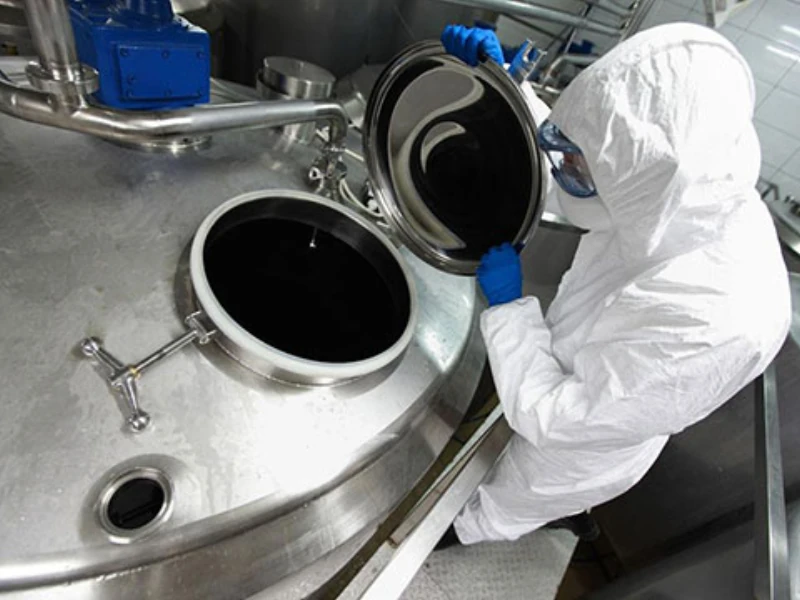
Clean-in-Place (CIP) is an advanced automated cleaning technology that requires no equipment disassembly. Through a circulating pipeline system, it precisely controls cleaning pressure, flow rate, temperature and contact time to complete automatic cleaning, rinsing and disinfection on the inner walls of tanks, pipelines and fully enclosed production equipment. It is widely deployed in pharmaceutical mixing equipment, transfer pipelines, fluid bed processors, coating machines and other closed production devices. CIP cleaning delivers highly repeatable cleaning results, records full-process operational data and minimizes manual intervention. It effectively reduces production downtime and cross-contamination risks, fully meeting FDA and GMP requirements for data traceability and cleaning validation. For this reason, it has become the dominant cleaning method for modern standardized pharmaceutical production lines.
2.3 Clean-out-of-Place (COP)
Clean-out-of-Place (COP) requires operators to disassemble detachable equipment parts and transfer them to designated independent clean areas for deep cleaning, drying and sterilization treatment. It is specially designed for filters, sealing parts, mixing paddles and special-shaped pipelines that cannot be thoroughly cleaned by CIP systems.
Standard COP operational procedures include equipment locking, component sorting, impurity cleaning, purified water rinsing, constant-temperature drying, sterilization treatment and pre-assembly quality inspection. All disassembled components need unified marking to avoid part mixing and secondary contamination. Although COP achieves comprehensive and thorough component cleaning, it involves complex procedures, long processing cycles and intensive manual operations, requiring strict SOP execution and clean area environment control. It is an essential technical means for pharmaceutical equipment preventive maintenance and deep residual cleaning.
3. Cleaning Materials and Supporting Equipment for Pharmaceutical Equipment
Qualified cleaning effects and regulatory compliance depend on matched professional cleaning materials and dedicated supporting cleaning equipment. Scientific material selection and tool configuration effectively support residual contamination control and biofilm inhibition, strictly conforming to GMP and FDA industrial specifications.
3.1 Common Cleaners and Solvents for Pharmaceutical Work
Cleaning materials used in pharmaceutical production must meet low residue, equipment material compatibility and easy rinsing standards. Ethanol and isopropanol are widely used to remove surface oil stains and achieve surface sterilization of production equipment. Hydrogen peroxide eliminates microbial biofilms, applicable for final deep cleaning of sterile production equipment. Citric acid and dilute hydrochloric acid remove mineral deposits and oxide layers on stainless steel equipment surfaces. Acetone dissolves stubborn organic residues, supporting deep cross-batch cleaning. Sodium bicarbonate enables mild cleaning for precision and fragile equipment. Purified water serves as the final rinsing medium to eliminate residual cleaning agents and meet ultimate cleaning qualification standards.
3.2 Special Pharmaceutical Cleaning Equipment and New Technologies
Professional pharmaceutical cleaning systems consist of precision cleaning equipment and automated control systems. Ultrasonic cleaning equipment relies on cavitation effects to remove hidden residues in tiny holes and dead corners of disassembled parts, perfectly matching COP cleaning workflows. High-pressure cleaning devices eliminate surface dirt on large-scale production equipment. As the core automated cleaning system, the CIP system precisely regulates cleaning temperature, pressure and flow parameters to record full-process data and ensure repeatable cleaning quality. In addition, emerging intelligent spraying tools and AI parameter optimization technologies effectively reduce manual operation errors and cross-contamination risks, stabilizing long-term cleaning consistency. Enterprises can refer to professional pharmaceutical equipment cleaning guidelines to select matched technical solutions for different production scenarios.
4. Pharmaceutical Equipment Cleaning Validation and Qualification System
Cleaning validation and cleaning qualification constitute core modules of the pharmaceutical GMP management system, complying with 21 CFR 211 regulatory standards. They systematically control equipment residual pollutants, microbial load and cross-contamination risks, ensuring stable drug quality and smooth regulatory audits.
4.1 Definition and Difference Between Cleaning Validation and Cleaning Qualification
Cleaning validation refers to a systematic and documented verification process. Through multiple batches of challenge testing, it verifies that formulated cleaning SOPs can stably control pollutant residues below the MACO acceptable limit with high repeatability. In contrast, cleaning qualification is a daily routine compliance inspection mechanism. Operators judge the pass rate of a single cleaning operation through regular visual inspection and on-site sampling testing.
4.2 Core Process, Test Methods and Compliance Rules of Cleaning Validation
The entire cleaning validation workflow starts with professional risk assessment, covering scheme formulation, on-site sampling, data analysis and final report issuance. The mainstream detection methods include swab sampling and rinsing water sampling, combined with TOC detection, physical and chemical residue analysis and microbial load testing. All detection data must reach LOQ quantitative standards, and every operational link requires complete archived records to support regulatory audits.
4.3 Rules and Validation Points for First Cleaning of New Equipment
Before new pharmaceutical equipment is put into formal production, primary cleaning and stainless steel passivation treatment must be completed. This process removes manufacturing and installation residual oil stains, metal debris and passivation residues. After purified water cyclic rinsing, special sampling is conducted to detect water conductivity, TOC content and bacterial count, establishing baseline cleaning data to complete pre-production compliance verification.
5. Building and Running Standard Cleaning Procedures
Standardized cleaning procedures ensure controllable, repeatable and audit-friendly cleaning results. They form a complete document management system that meets GMP and FDA traceability requirements, effectively reducing manual operation errors and cross-batch contamination risks.
5.1 Core Rules for Making Cleaning Procedures
Standard pharmaceutical cleaning management rejects one-size-fits-all schemes. Enterprises must adopt risk-based customized control strategies and formulate differentiated cleaning plans based on equipment materials, product characteristics, residue solubility and pollution degree. It is necessary to distinguish routine daily cleaning, periodic deep cleaning and product changeover cleaning to achieve refined scenario-based control.
5.2 Key Points for Writing Cleaning SOP
A qualified cleaning Standard Operating Procedure (SOP) must be detailed, operable and verifiable. It clearly defines cleaning targets, cleaning agent concentration, operational temperature, working pressure, solution contact time, equipment disassembly steps, sampling positions and qualification standards. Targeted specifications for CIP, COP and manual cleaning are formulated separately to unify operational standards and ensure consistent and repeatable cleaning quality.
5.3 Cleaning Record Management and Traceability Rules
Complete cleaning logs, parameter records and validation reports form the core of GMP compliance traceability. Operators shall truthfully record cleaning time, operator information, equipment status, process parameters and test results, building a full-cycle data traceability chain. These complete data support daily compliance supervision and regular re-validation work, meeting strict audit traceability requirements.
6. Special Cleaning Considerations for Equipment in Different Scenarios
Equipment used in different pharmaceutical production links varies greatly in structural design, material performance and pollution load. General unified cleaning schemes cannot meet high-standard quality and compliance requirements, so targeted customized cleaning control is required for special production equipment.
6.1 Special Cleaning Requirements for Biopharmaceutical Process Equipment
Biopharmaceutical production equipment is often contaminated by protein, polypeptide and bacterial residues, which are prone to forming adhesive biofilms and hidden residual pollutants. During cleaning, enterprises need to strictly control microbial load, endotoxin content and protein residue, avoiding highly corrosive cleaning agents and adopting mild oxidative disinfection technologies. Post-cleaning microbial and endotoxin sampling detection is mandatory to meet GMP sterile drug production standards. The whole process follows standardized biopharmaceutical production specifications to ensure cleaning compliance.
6.2 Limits, Difficulties and Solutions for Mixing Equipment Cleaning
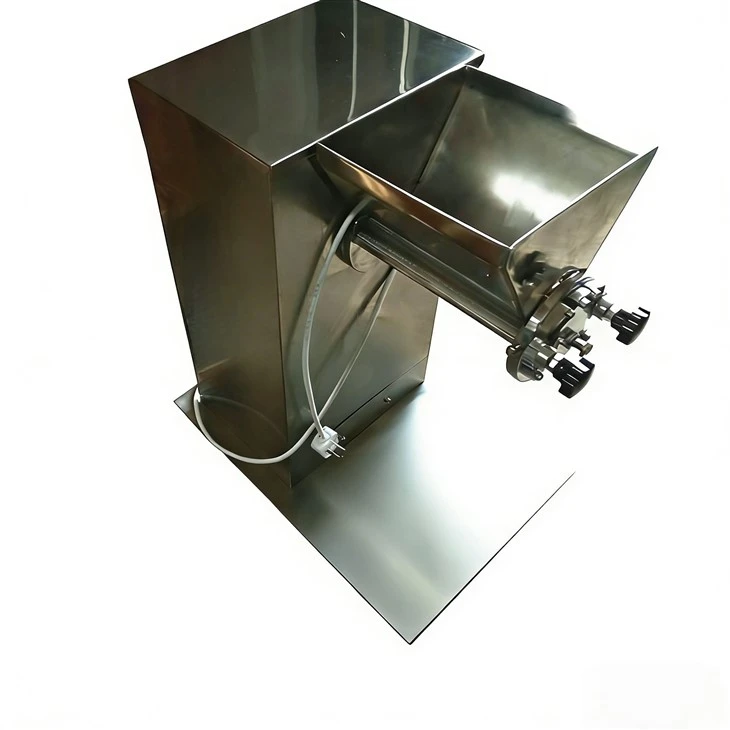
Pharmaceutical mixing equipment such as V-blenders and ribbon blenders has complex inner cavity structures and inherent mixing dead zones, where powder materials easily accumulate and adhere to surfaces. Single CIP cleaning cannot achieve full coverage, requiring auxiliary manual cleaning. The core pain points include residual trapped powder, incomplete local cleaning and high cross-batch contamination risks. Enterprises adopt combined cleaning solutions integrating automatic CIP cyclic cleaning, targeted nozzle spraying, COP deep cleaning of disassembled parts, cross-batch powder blowing and extended cleaning agent contact time to eliminate hidden dead zone pollution.
7. Core Challenges, Industry Best Practices and Value of Pharmaceutical Cleaning
Pharmaceutical equipment cleaning is a high-precision quality control work restricted by material characteristics, equipment structure, manual operation and industrial regulations, with multiple hidden contamination risks. Standardized industry best practices can effectively improve cleaning stability and regulatory compliance.
7.1 Common Core Challenges of Pharmaceutical Equipment Cleaning
Current mainstream cleaning difficulties include undetectable micro-residues, incomplete cleaning of equipment dead zones, and stubborn adhesive pollutants. Manual cleaning suffers from poor result repeatability and frequent human errors, leading to high cross-batch contamination risks. Frequent product changeovers also generate differentiated residue limit standards, further increasing the difficulty of cleaning validation and daily refined control.
7.2 Industry Best Practices for Standard Cleaning Work
Mature industry cleaning management starts with comprehensive risk assessment to formulate customized cleaning plans and solidify standardized SOP processes. Enterprises implement dual management of cleaning validation and daily cleaning qualification, replace repetitive manual work with automated CIP systems, conduct regular equipment passivation and frequent sampling detection, and retain complete audit records. This set of practices realizes full-process controllability, traceability and repeatability of cleaning work.
7.3 Four Core Benefits of Mastering Professional Cleaning Knowledge
Professional pharmaceutical equipment cleaning technology brings multi-dimensional core values: protecting operators, production equipment and workshop environment; reducing equipment downtime and production suspension losses; improving equipment utilization rate and extending service life; saving comprehensive costs of cleaning materials, manual labor and product rework. It helps pharmaceutical enterprises meet quality supervision standards and achieve sustainable economic benefits.
8. Pharmaceutical Equipment Cleaning Parameter Specifications
| Cleaning Type | Applicable Scenario | Core Controlled Parameters | Qualification Standard |
|---|---|---|---|
| Manual Cleaning | Special-shaped parts, lab equipment, high-activity material devices | Cleaner concentration, contact time, drying temperature | Visual no residue, qualified swab sampling |
| CIP Cleaning | Closed tanks, pipelines, mixing equipment | Cleaning temperature, flow rate, pressure, cyclic time | TOC qualified, zero microbial residue, full data record |
| COP Cleaning | Filters, seals, detachable mixing components | Rinsing times, sterilization temperature, drying duration | Purified water conductivity qualified, no residual pollutants |
9. Application Scenarios of Pharmaceutical Equipment Cleaning Technology
| Industry Field | Specific Application Scenarios | Core Cleaning Requirements |
|---|---|---|
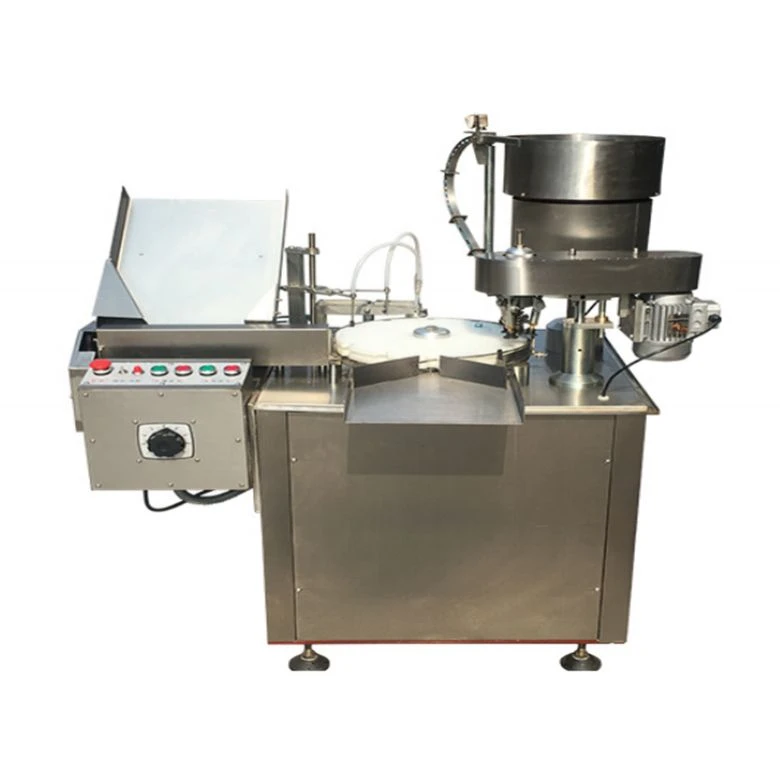
| Chemical Pharmaceutical Production | Tablet pressing, capsule filling, liquid filling production lines | Control chemical residue, avoid cross-batch drug mixing pollution |
| Biopharmaceutical Production | Protein and peptide drug processing, sterile preparation production | Strict control of biofilm, endotoxin and microbial load |
| Health Supplement Manufacturing | Powder mixing, tablet polishing, canned product processing | Low residue, no foreign impurities, stable appearance quality |
| Food & Fine Chemical Industry | Edible tablet, functional powder production equipment | Food-grade cleaning agents, no toxic residual pollution |
10. FAQ
Q1: What are the three cleaning types in the pharmaceutical industry?
A: Manual cleaning, Clean-in-Place (CIP), and Clean-out-of-Place (COP).
Q2: What is the best cleaning method for medical instruments?
A: Choose targeted methods based on instrument structural features. Adopt CIP for closed pipeline equipment, COP for detachable precision parts, and combine manual cleaning with ultrasonic cleaning for special-shaped components.
Q3: What are the five stages of cleaning and disinfection?
A: Pre-cleaning, main cleaning, rinsing, disinfection and drying.
Q4: What is Type C cleaning in the pharmaceutical industry?
A: It refers to medium-level cleaning conducted between different product batches, falling between routine daily cleaning and thorough deep cleaning, which requires formal cleaning qualification verification.
Q5: Is there a CDER approved list of drug production equipment?
A: CDER does not issue official approved equipment lists. Pharmaceutical enterprises shall independently complete equipment qualification and cleaning validation in accordance with regulatory standards.
Q6: Can Total Organic Carbon (TOC) test check pollutant residue after cleaning?
A: Yes. TOC testing is a core method for detecting organic residual pollutants, which is usually used in combination with swab sampling to improve detection accuracy.
Q7: How to run cleaning validation, including validation for homeopathic medicines?
A: Start with comprehensive risk assessment and calculate MACO values scientifically. For homeopathic medicines, focus on strengthening cross-contamination control of low-dose active pharmaceutical ingredients.
Q8: What is the acceptable limit for detergent residue, and what sets this limit?
A: No unified fixed standard exists. Enterprises calculate the maximum acceptable detergent residue limit based on toxicology data and equipment contact area.
Q9: Is testing only rinse water samples enough to judge if residue meets standards in cleaning validation?
A: No. For strongly adsorbed stubborn residues, swab sampling must be supplemented. The combination of rinse water testing and swab sampling is required for comprehensive residue detection.
11. Conclusion
There is no universal standardized cleaning scheme applicable to all pharmaceutical production equipment. Enterprises need to select targeted cleaning methods based on equipment structural characteristics and material properties, and flexibly apply manual cleaning, CIP and COP technologies. By formulating standardized cleaning SOPs, implementing regular cleaning validation and daily qualification supervision, and relying on scientific sampling detection and complete data archiving, enterprises can fully comply with GMP regulatory requirements. Standardized equipment cleaning management effectively eliminates cross-contamination risks, guarantees drug quality and production safety, reduces equipment downtime, product rework and material waste, and ultimately achieves dual goals of pharmaceutical quality compliance and production cost optimization.
Related Posts
GMP Compliant Design
Comply with GMP standards, featuring easy-to-clean surfaces and validation-ready documentation.
On-Time Delivery
Reliable lead times for standard and custom equipment, supporting your production launch without delays.
Professional After-Sales
Global technical support and on-site installation/training to ensure long-term stable operation.