

-
Blake.Chu sales consultant
-
Email: 113217160@qq.com
-
Phone/WhatsApp: +86 17774546154

Process Development in Pharmaceutical Industry: Complete Guide
1. Core Definition of Pharmaceutical Process Development
In pharmaceutical research, three core modules support drug industrialization: process development, formulation development, and dosage form development. They work step by step and cooperate with each other. Process development focuses on the production routes of API and finished drugs. It uses route screening, parameter optimization, process scale-up, technology transfer and GMP process validation.
It turns lab-scale small processes into stable, mass-producible and legal industrial production systems. Its main goals are controllable production, lower cost, higher efficiency and consistent product quality across batches. Formulation development mainly adjusts API and pharmaceutical excipients. It improves their compatibility, solubility and bioavailability. Dosage form development chooses drug forms and clinical usage based on finalized formulas. These three parts form a full research loop: finish formula → make dosage form → mass production. This ability is key for pharmaceutical companies and CDMOs.
2. Core Value and Industry Significance of Pharmaceutical Process Development
In biopharma production, process development is no longer just a simple production support task. It becomes a core strategic ability covering drug research, pilot scale-up, GMP manufacturing and commercial launch. Industry data shows over 90% of new drug candidates stop research. The main reasons are unstable processes, out-of-control scale-up effects, weak quality control and poor industrial adaptation. Early and systematic process development removes technical barriers from lab to commercial production. It plays key roles in risk control, cost reduction, compliance application, technical innovation and commercial launch. It forms the main pillar of the CMC system for pharma firms and CDMOs.
2.1 Control full-cycle risks and raise industrial success rate
During new drug research and mass production, unstable processes, out-of-control parameters, too many impurities, low yield and uneven batches cause most failures. Modern process development follows the QbD (Quality by Design) idea. It identifies CPP (Critical Process Parameters) and CQA (Critical Quality Attributes). It carries out route screening, risk assessment, deviation prediction and process robustness tests. It solves the common problem: small lab processes work, but large-scale production fails. It avoids OOS (Out of Specification) and batch scrapping. It greatly helps new drugs turn into real products.
2.2 Improve production systems to lift quality and cut costs
Process development is the key tool for lean pharmaceutical manufacturing. It optimizes API synthesis routes, shortens reaction steps and raises raw material usage. It also uses green chemistry methods to increase product yield and cut solvent waste and pollutant discharge. Standard and repeatable mature processes reduce manual work, remove production bottlenecks and shorten production time. They cut material, labor and maintenance costs. They support large-scale production of small-molecule API, sterile injections and biotech drugs, and maximize commercial profits.
2.3 Build compliance systems to support global regulatory applications
Regulators such as NMPA, FDA and EMA set strict rules for CMC documents and traceable data. Process development follows the ALCOA+ data integrity rules. It completes process research, method validation, technology transfer and GMP batch validation. It creates complete checkable process files. These files support IND / NDA / BLA applications. It reduces review comments and inspection defects. It builds a solid compliance base for both domestic and global drug launch.
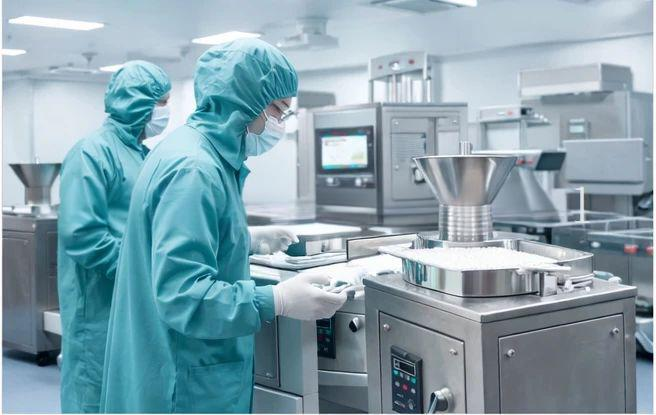
Strict pharma equipment validation is integrated into this compliance system, ensuring all production links meet standardized regulatory requirements and support stable global drug listing applications.
2.4 Drive technical updates and industrial innovation
Modern process development uses new technologies including PAT (Process Analytical Technology), digital simulation, automated quality control and continuous manufacturing. It changes the old trial-and-error research mode. Real-time monitoring and smart parameter control solve hard production problems for poorly soluble drugs, high-potency drugs and complex biotech medicines. It pushes the industry from experience-based production to precise, smart and green manufacturing. It supports the development of new drugs and reformulated drugs.
2.5 Speed up commercial launch and build market advantages
Process development breaks technical barriers from lab test, pilot test to commercial production. It enables smooth technology transfer, shortens research cycles and cuts time to market. Stable mass-production processes keep consistent batch quality and flexible production capacity. It handles changing market demand and keeps steady drug supply. It helps companies win market share and build long-term competitive strengths. A standardized process development system marks the core competitiveness of pharma companies and CDMOs. It lowers research failure rates, unifies production standards and improves drug quality. It forms an important foundation for high-quality and global biopharma industry growth.

3. Core Stages of the Full Pharmaceutical Process Development Workflow
Pharmaceutical process development is a step-by-step, highly standardized system project. It follows the core QbD logic. It covers the whole chain: early molecule feasibility study to continuous commercial manufacturing. It has six main stages. Each stage builds on the last, shares data and keeps improving. Researchers focus on CQA and CPP all the time. They gradually remove process risks, scale-up effects and quality changes. Finally they create stable, legal and mass-producible industrial production systems.
3.1 Research Exploration Stage
This is the early basic step of process development. Its main goal is to check whether scientists can make the candidate molecule in large production. Teams screen synthesis routes, test basic reaction conditions, check raw material compatibility and do simple impurity analysis. They find high-risk process points and possible CPPs. This stage does not aim for high yield or stable results. It quickly drops routes that cannot scale up or carry high risks. It locks the best research direction and supplies basic lab data for later process design.
3.2 Process Design Stage
This stage builds the blueprint for the whole production process using data from exploration work. Companies use QbD to set product CQA targets. They define the controllable range of CPPs. They set standard unit operation steps and raw material standards, and select production equipment. Teams run early risk assessment, build basic quality control systems and analytical methods. They output process flow charts, material lists and research plans. These set standard rules for lab tests, parameter optimization and later scale-up work.
Reasonable selection and matching of pharmaceutical production equipment in this stage is critical to ensuring the feasibility and scalability of subsequent process scale-up and mass production.
3.3 Preliminary Process Research Stage
This stage centers on lab small-scale tests. Teams test planned process routes and pick good parameters. They use single-factor tests and orthogonal tests to adjust reaction temperature, pH, stirring speed and reaction time. They learn how these parameters change product purity, yield and impurity levels. They lock a stable small-scale process window. They also improve basic test methods to accurately measure related substances, content and color. They build simple impurity control strategies and create repeatable lab production workflows.
3.4 Process Scale-up Stage
Process scale-up links lab small tests and industrial mass production. It mainly solves the scale-up effect problem common in pharma. Lab processes cannot directly run in big factories. Teams fix engineering differences in heat transfer, mass transfer, mixing efficiency and material residence time for large equipment. They run many pilot batches to test if CPPs fit large production. They check process changes caused by different equipment and bigger feeding amounts. They optimize material transfer, filtration, drying and purification steps. They stop rising impurities, lower yield and uneven quality after scale-up. They lay the process base for commercial manufacturing.
3.5 Process Optimization Stage
This stage improves process stability and economic value based on weak points found in pilot tests. Teams use DoE (Design of Experiments) to build the Design Space. They set the best parameter range. This makes the process resist small changes from raw materials, equipment and environment. Researchers shorten reaction steps, improve solvent systems and raise raw material usage to cut cost, energy use and pollution. They keep optimizing impurity control, product stability and batch consistency. Finally they create mature industrial processes with high yield, low cost and strong stability.
3.6 Validation and Commercial Production Launch Stage
This final stage makes the process legal and ready for market supply. Teams strictly follow GMP rules. They run PPQ (Process Performance Qualification), cleaning validation and analytical method validation. They build full process documents, batch records and SOP systems that meet ALCOA+ data integrity rules. Multiple continuous validation batches prove the process can make qualified products steadily. These supply complete CMC data for IND / NDA / BLA regulatory applications. After validation, production moves to commercial manufacturing. Teams use CPV (Continued Process Verification) to monitor production all the time and keep improving the process. This guarantees long-term stable and legal drug supply.
4. Technology Empowers the Upgrade of Pharmaceutical Process Development
Traditional pharmaceutical process development depends on trial and error. It often has rough parameter control, weak process stability, strong scale-up effects, long research cycles and high energy and waste output. As the pharma industry turns digital, smart and green, new technologies such as automatic control, big-data PAT, simulation modeling, in silico prediction and green chemistry support the full CMC workflow. They change process development from experience-driven to data-driven, model-driven and intelligence-driven. They lift process stability, industrial success rate and production economy.
4.1 Automation Technology: Standard and Precise Process Control
Automation systems form the basic support for modern process development. Smart reaction devices, high-throughput screening platforms and online test systems perform high-precision closed-loop control for CPPs. They remove human operation errors, keep consistent lab data and batch production, and lower OOS risks. In commercial production, automatic continuous operation and real-time parameter alerts standardize every unit operation. They strengthen the GMP production system and greatly reduce batch variation and rework.
4.2 Big Data and PAT Technology: Build Data-Driven Research Systems
PAT and industrial big data help collect, model and trace full-process data. Teams study links between process parameters and CQAs. They find the best process window, measure production risks and support Design Space setup and process robustness verification. The whole work follows ALCOA+ data integrity rules. It makes CMC research more scientific and easier to pass regulatory reviews.
4.3 Simulation Modeling and Digital Twin: Solve Core Scale-up Problems
Failed scale-up is the main barrier for new drug industrialization. It comes from differences in heat transfer, mass transfer and material residence time between lab and factory equipment. Scientists use kinetic modeling, fluid simulation and digital twin technology. They simulate production status under different output levels and equipment settings in virtual environments. They predict impurity changes and process errors in advance and optimize parameters. Virtual tests replace many real pilot batches. This avoids scale-up risks and supports smooth technology transfer and large-scale production.
4.4 In silico Prediction and Simulation: Optimize Processes and Formulas Early
People widely use in silico simulation in early new drug research. AI molecular modeling predicts API solubility, excipient compatibility, crystal features and degradation rules. It quickly selects the best formula and reaction system. It solves early problems such as poor dissolution, weak stability and low bioavailability of poorly soluble drugs. It cuts useless trial tests and shortens process and formulation development time.
4.5 Green Chemistry Technology: Support Low-Carbon Industrial Upgrade
Green chemistry focuses on higher atom economy. Teams use optimized synthesis routes, high-efficiency catalysis, continuous flow reactions and solvent recycling. They shorten production workflows, cut energy use and waste discharge, and lower production and environmental protection costs. They build low-carbon, efficient and sustainable industrial systems, matching the trend of high-quality green development in pharma. These new technologies work together to form a full smart research toolkit. They let teams predict risks early, run fewer tests, keep stable quality, scale up easily and meet all compliance rules. They raise new drug industrial success rates and shorten time to market. They form the core driving force for smart upgrades in pharmaceutical manufacturing.
5. Practical Cases of Pharmaceutical Process Development (Manufacturing Examples)
The real value of pharmaceutical process development shows in stable, low-cost and legal commercial production. Theoretical process design must go through lab optimization, pilot scale-up, repeated process updates and mass-production validation. Only then can teams solve industrial problems such as excess impurities, low yield, unstable batches, failed scale-up and poor solubility. This chapter uses three common commercial scenarios: small-molecule solid oral drugs, sterile injections and innovative biotech drugs. Real cases of process development, formula optimization and scale-up show the practical value of process development and its effect on quality improvement and cost reduction.
5.1 Case 1: Scale-up and Stability Optimization for Small-molecule Oral Solid Drugs
One poorly soluble small-molecule new drug worked well in small lab tests. But during pilot scale-up, strong scale-up effects appeared. Dissolution was low, batches differed greatly, long-term stability was poor and the pass rate of finished products dropped sharply. The project team used systematic process development and QbD ideas. They reorganized CQAs and CPPs. They used DoE tests on mixing time, granulation speed, drying temperature and tablet hardness to find a robust process window.
The team also adjusted excipient ratios in the formula. They optimized disintegrants and fillers to improve API dispersion and dissolution. They used spray drying to raise raw material solubility and bioavailability. After many rounds of process updates and pilot tests, they fixed unstable dissolution, uneven content and poor stability after scale-up. The process yield rose by 12%. Batch consistency improved a lot. They finished technology transfer and started commercial production in the GMP workshop to meet long-term mass supply needs.
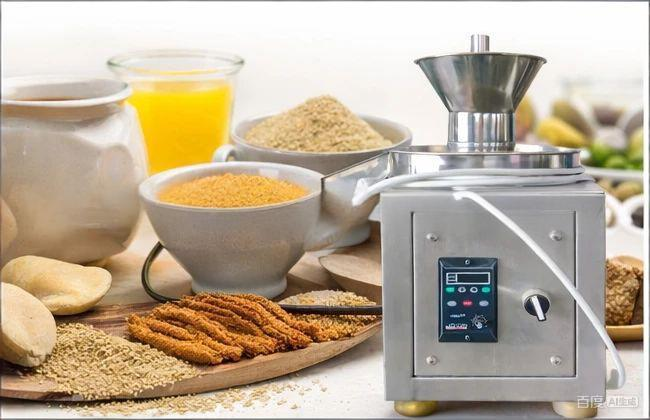
In actual production, professional powder sizing equipment and granulation devices are adopted to stabilize particle uniformity, which fundamentally improves tablet dissolution and batch consistency of solid oral drugs.
5.2 Case 2: Process Optimization and Compliance Launch of Sterile Injection
An antibiotic sterile injection had poor solution clarity, slow impurity build-up and unstable sterile filling in trial production. It faced high OOS risks and failed to meet NMPA and FDA application requirements. The process team optimized the whole production chain for sterile products. They improved filtration sterilization, low-temperature filling parameters and freeze-drying curves. They adjusted solvent systems and stabilizer ratios. They effectively slowed drug breakdown and impurity formation.
5.3 Case 3: Purification Upgrade and Capacity Scale-up for Antibody Biologics
The team also used digital simulation to predict scale-up risks. They fixed typical bioprocess problems such as uneven mass transfer and unstable activity. They realized smooth scale-up from lab bioreactors to large industrial bioreactors. After optimization, the total process yield increased by nearly 20%. Product purity and structure uniformity improved greatly.
Production costs dropped sharply. The process supported clinical trials and stable commercial supply in later stages. These three typical cases cover small molecules, sterile injections and biotech drugs. They fully prove that systematic process development, formula optimization and scale-up iteration remove industrial bottlenecks at the source. The results include stable quality, controllable risks, lower costs, higher capacity and full compliance. Process development is the necessary step to turn lab research results into market drugs, and it directly shows the industrialization ability of pharma companies and CDMOs.
6. Core Implementation Strategies for Pharmaceutical Process Development
Pharmaceutical process development carries high risks, strict compliance rules and frequent updates. To avoid unstable processes, failed scale-up and long research cycles from old trial-and-error methods, pharma companies and CDMOs need standardized, systematic strategies. These strategies improve process stability and industrial success rates in all aspects.
For risk and quality control: Companies follow the QbD idea. They accurately identify CQAs and CPPs, build process risk matrices and prevent scale-up effects and OOS risks early. They use CPV to monitor mass production dynamically and guarantee batch consistency and long-term stability.
For compliance and efficiency: Teams follow GMP rules and ALCOA+ data integrity all the time. They improve CMC research and validation systems to support global IND / NDA / BLA applications. They use DoE to build Design Space instead of old single-variable trial tests. This greatly cuts test batches, shortens process finalization and technology transfer time, lifts quality and lowers costs.
For technology and industry cooperation: Companies actively introduce PAT, in silico simulation, green chemistry and continuous flow manufacturing. They push digital, smart and low-carbon process upgrades. They also work with universities, research institutes and CDMO platforms. Joint research solves hard problems for complex drug processes. New technical results quickly land in production. This continuously strengthens the company’s ability in process research and commercial manufacturing.
7. Summary
Pharmaceutical process development belongs to the core CMC system. This paper explains its definition, full-life-cycle value and six-stage workflow. It introduces digital enabling technologies such as PAT, in silico and DoE. With industrial cases, it proves the value of CPP and CQA control under the QbD idea. It also puts forward systematic implementation strategies. This system helps pharmaceutical companies and CDMOs control scale-up risks, meet GMP compliance and speed up new drug commercialization. It acts as their core support.
8. FAQ
Q1: What is pharmaceutical process development?
In pharmaceutical research, three core modules support drug industrialization: process development, formulation development, and dosage form development. They work step by step and cooperate with each other. Process development focuses on the production routes of API and finished drugs. It uses route screening, parameter optimization, process scale-up, technology transfer and GMP process validation. It turns lab-scale small processes into stable, mass-producible and legal industrial production systems.
Q2: What is QbD in pharmaceutical manufacturing?
Modern process development follows the QbD (Quality by Design) idea. It identifies CPP (Critical Process Parameters) and CQA (Critical Quality Attributes). It carries out route screening, risk assessment, deviation prediction and process robustness tests.
Q3: What are CPP and CQA?
CPP means Critical Process Parameters; CQA means Critical Quality Attributes. Researchers focus on CQA and CPP all the time during process development.
Q4: What is the difference between lab scale and commercial scale production?
Lab processes cannot directly run in big factories. Teams fix engineering differences in heat transfer, mass transfer, mixing efficiency and material residence time for large equipment. They run many pilot batches to test if CPPs fit large production.
Q5: What is ALCOA+?
Process development follows the ALCOA+ data integrity rules. ALCOA+ is the data integrity requirement for GMP related documents and records.
Related Posts
GMP Compliant Design
Comply with GMP standards, featuring easy-to-clean surfaces and validation-ready documentation.
On-Time Delivery
Reliable lead times for standard and custom equipment, supporting your production launch without delays.
Professional After-Sales
Global technical support and on-site installation/training to ensure long-term stable operation.