

-
Blake.Chu sales consultant
-
Email: 113217160@qq.com
-
Phone/WhatsApp: +86 17774546154
Granulators
All types of Granulators are multi-functional, practical processing machines widely used in dozens of industries. They bring high efficiency, lower production costs and stable product quality for all factories. As long as you pick a proper granulator according to your raw materials and output demands, follow standard operation steps and stick to daily maintenance, this equipment will serve your production safely and reliably for many years.
Send your requirements, we will quote for you within 12 hours
Description
A granulator is processing equipment. It turns different materials into fixed shapes. People use this machine widely in many industries, including chemical, food, pharmaceutical, construction, mineral, ceramic and plastic industries. It can turn powder or tiny fine materials into bigger granules. It can also grind solid materials into small granules.
Advantages of Granulators
- Raise production output:Granulators greatly speed up raw material processing, and they help factories make more products every day.
- Save raw material costs:After materials are pressed into granules, they take less space for storage and transportation. This cuts down your total costs.
- Improve finished product quality:The granulation process makes all finished granules even and the same size.
- Friendly to the environment:Granulators reduce waste materials. Factories can reuse leftover materials, so production creates less pollution.
- Fit many kinds of materials:Granulators can process countless different raw materials, so they work well for nearly all industries.
Six Reasons to Choose Our Granulators
- Stable High Quality
All buyers hope to get high-quality machines that match their production needs. We strictly check every granulator before delivery. All our equipment meets standard industry requirements.
- Great Brand Reputation
A company’s reputation is very important when customers buy machines. Most buyers will pick manufacturers with good praise in this industry. Our brand wins wide positive feedback from clients all over the market, and you can trust us fully.
- Thoughtful Customer Service
Good customer service makes buyers feel valued and satisfied during their whole shopping and using experience. Our service team replies to all your questions quickly and solves equipment problems in time.
- Rich Industrial Experience
Our company has worked in the granulator industry for many years. We fully understand every machine’s performance. We can provide you with high-quality equipment and professional technical support.
- Simple & Convenient Operation
All customers love easy-to-use machines that simplify production steps, speed up processing and save labor work. Our granulators have simple operation steps, and new workers can learn to use them quickly.
- Safe & Stable Running
Customers want to stay safe while using production machines. Our granulators are built with complete safety protection parts. We follow strict safety making rules to remove hidden dangers in your workshop.
Different Types of Granulators
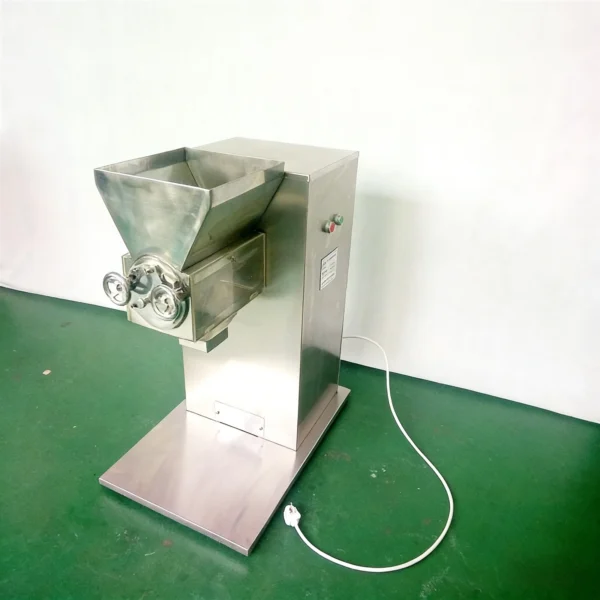
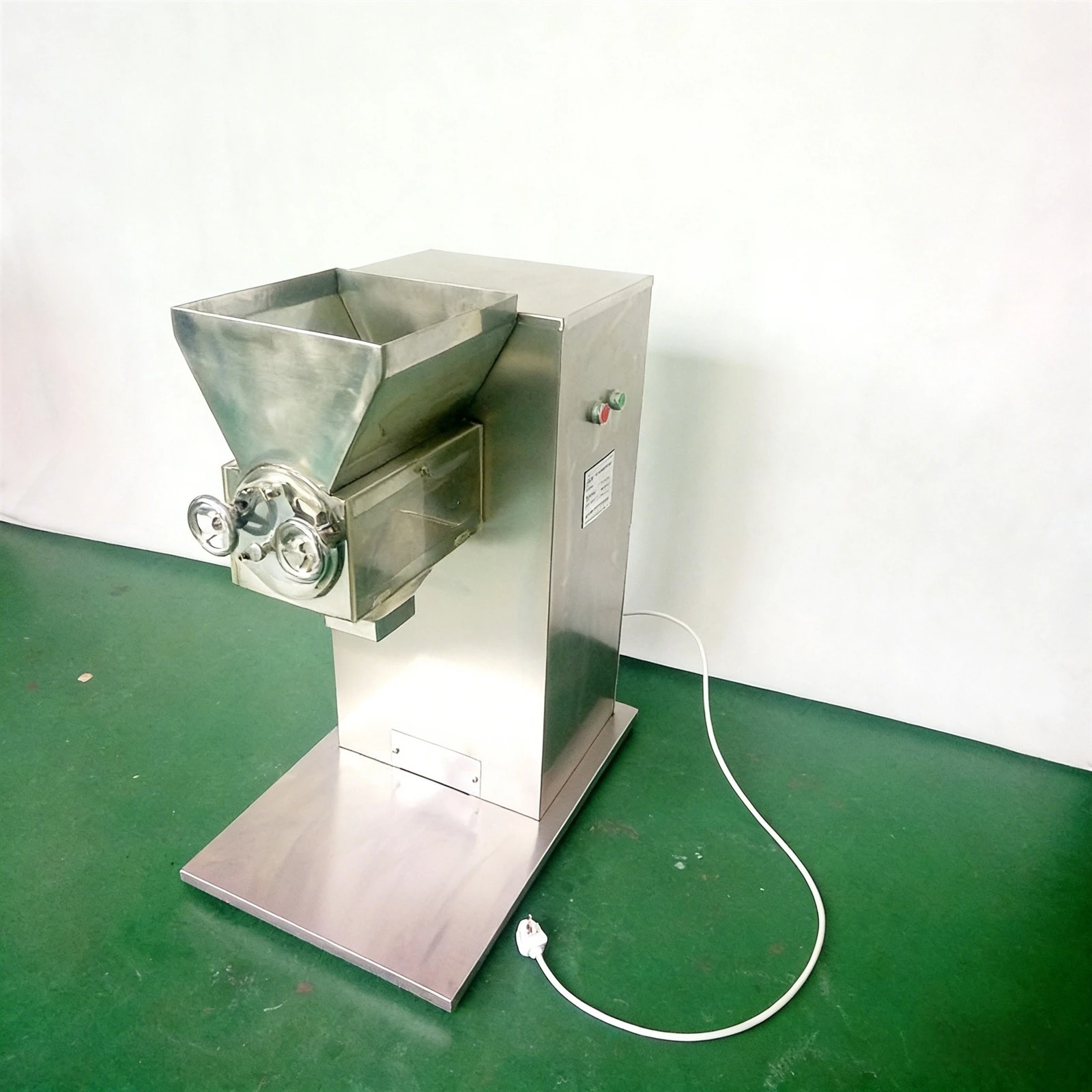
- Oscillating Granulator
This machine has a rotor that swings back and forth. Powders pass through a swinging mesh screen, and then the machine makes granules of your wanted size. The granule size depends on the holes on the screen. You can customize screen hole sizes to fit your materials. Besides, you can adjust the rotor’s rotating speed based on your raw material features. After granulation, finished granules collect at the machine’s outlet.
- Roller Granulator (Dry Granulator)
This machine uses dry granulation technology, so people also call it a dry granulator. It turns powder into granules without adding any liquid. Two rollers spin in opposite directions on this equipment. When you pour powder into the machine, the rollers press the powder into solid dense flakes. Next, a grinding part breaks these flakes into even granules. Finally, granules pass through a screen, and you get granules with uniform sizes.
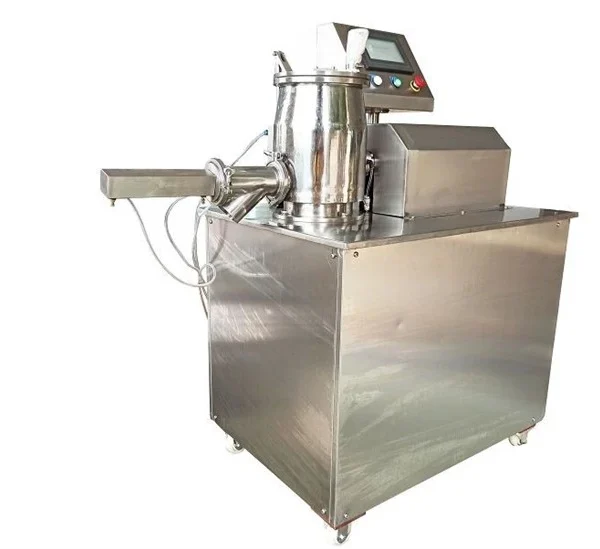
- High Shear Granulator (High-Speed Granulator)
People also name this machine a high-speed granulator. It mixes powders at high speed to make granules, and it works with very high efficiency. A fast-spinning impeller sits inside the machine. It creates strong mechanical force to mix raw materials fully and form neat granules. All finished granules have the same size and density.
- Vibration Granulator
The vibration structure is the core working part of this granulator. It finishes granulation mainly by vibration. Its working idea is similar to the oscillating granulator. But it does not break materials by rotation; it uses vibration power instead. Vibration mixes with mechanical force, and raw materials stick together to form standard granules. You can change vibration strength to match different granulation materials.
- Fluidized Bed Granulator
This granulator works in a totally different way from other types. It blows upward air to lift powder and turn it into a fluid-like state. In this fluid state, granules move just like liquid. Heat and water spread evenly across all materials during granulation. Then workers spray binding liquid onto these floating powder granules. The binding liquid makes small powder pieces stick together and turn into full granules. After granules form completely, the machine dries them for your next production steps.
Application Fields of Granulators
- Food Industry
Factories widely use granulators in food processing. They make granular food raw materials from beans, grains and more. Granular food materials are easier to store and process, and they raise the whole production line’s working speed.
- Pharmaceutical Industry
Granulators are essential equipment for medicine factories. They turn medicine powder into small drug granules. Workers can press these granules into tablets or sell them as oral granule medicine. Granular medicine dissolves faster, human bodies absorb it more easily, and the medicine keeps stable quality for longer time.
- Chemical Industry
Chemical factories use granulators to turn chemical raw materials into granules. Granulated chemical materials have much stronger stability. They can store for a long time and transport easily, which improves the overall quality of chemical finished goods.
- Plastic Industry
Granulators mainly recycle waste plastic in this industry. They process all kinds of discarded plastic into plastic granules, so plastic resources get reused and do not go to waste.
- Metallurgical Industry
Granulators play an important role in metal and mineral production. They turn metal and mineral raw materials into granules for simpler smelting work. Metallurgical factories choose granulators for one main reason: granular materials burn more fully inside furnaces. This raises production efficiency and makes smelting work safer.
Main Parts of Granulators
- Feed Hopper
Workers put raw materials for granulation into this part. The oscillating granulator supports wet granulation, so the hopper can hold pre-wet materials. Manufacturers build feed hoppers completely from stainless steel to stop corrosion from raw materials.
- Oscillating Rotor
This rotor is also made of stainless steel. Workers install it at the bottom of the feed hopper. Many arm-shaped parts spread around the rotor in a circle. The sharp edges on these arms work like blades, and they break big clumps of materials into small pieces. The rotor swings and spins around a horizontal axis. It moves left and right to crush oversized material pieces. Workers can adjust both the rotor’s spinning speed and working time based on raw material features.
- Sieve
A sieve is a metal sheet with many small holes. It wraps half of the oscillating rotor from below, and it works as a mesh screen to separate materials. It uses stainless steel construction too. After the rotor crushes materials, the sieve sorts and screens these small pieces. Factories can order oscillating granulator sieves with different hole sizes and hole shapes. Screening is a key step for the oscillating granulator’s working process, and it controls finished granule sizes to match your production demands.
- Hand Wheels
An oscillating granulator usually has two hand wheels. They come with removable metal bars. Workers use them to fix the sieve and adjust how tight the screen stays. When you need to change the mesh screen, just loosen the fixing nuts and pull out the adjusting bars. You do not need any extra tools for this work.
- Discharge Chute
Workers build discharge chutes with fully welded, mirror-polished stainless steel. This smooth structure lets finished granular materials flow out of the machine fully and without blockages.
- Control Panel
Oscillating granulators are simple to operate, so their control panels do not have complicated designs. Normally, a control panel includes a start button, stop button, emergency stop button and power indicator lights.
- Motor and Gearbox
The electric motor and gearbox sit inside the machine’s base shell. The motor sends power through the gearbox to drive the rotor. The rotor then creates swinging and spinning movements to complete the full granulation process.
How to Maintain Granulators
- Check Blades Regularly
Check blade wear conditions often. Replace dull blades quickly when they lose sharpness. Make sure all blades install tightly, and tighten every fixing screw. Never let foreign metal objects fall into the machine’s feeding opening.
- Maintain the Lubrication System
Inspect and replace lubricating oil on a fixed schedule. Guarantee all moving machine parts get enough smooth oil. Check that all oil pipes stay unblocked, to prevent the machine from overheating. Clean the crushing chamber on a regular schedule: clear all leftover materials and small fragments inside to avoid blockages. Check the crushing chamber for wear damage, and repair or change it right away if you find serious wear.
- Inspect the Motor and Transmission System
Check the motor and transmission parts regularly to make sure they run normally. Look at the transmission belt’s tightness and wear level. Adjust the belt’s tightness or replace worn belts immediately.
- Examine All Safety Devices Often
Regularly check every safety part on the equipment, such as emergency stop buttons and overload protection devices. These checks make sure the machine runs safely at all times.
- Calibrate and Adjust Machine Settings Regularly
Based on how long you use the machine and changes in your processing materials, calibrate and adjust the equipment’s working parameters regularly. This step keeps the granulator working at its best performance level.
- Keep Complete Maintenance Records
Write down detailed records for every maintenance and inspection work. Record replaced spare parts, maintenance dates and all machine problems you find during checks. These records help you predict future maintenance needs and plan preventive maintenance work ahead of time.
Key Tips for Granulator Maintenance
If you follow all the above maintenance rules strictly, you can make industrial granulators last much longer and keep them running continuously and efficiently. If you need more detailed maintenance advice for special materials or working conditions, you can contact our service team at any time.
Choosing high-quality, reliable granulators is equally important for your production. Our company has served the plastic processing industry for more than thirty years. We produce strong, long-lasting granulators of many types, including beside-the-press granulators, film granulators, central large granulators and soundproof granulators.
Guide to Choosing the Right Granulator
- Choose the Right Granulation Process
Knowing your processing needs is the first step to pick a suitable granulator. People split granulation processes into two main kinds: wet granulation and dry granulation.
A wet granulator adds liquid materials during its working process. This work usually uses large amounts of water and cleaning agents. These liquids have two main jobs: they clean raw materials with dirt, and they cool down the machine body while running.
On the opposite side, dry granulators work without adding any liquid. Factories often use them for plastic molding, thermoforming and plastic extrusion production lines. Inside these working environments, dry granulators do not use water or other liquids. They rely on a totally dry pressing process to make standard granules.
- Think About Raw Material Features
The quality and type of your raw materials directly decide which granulator you should buy. Hard engineering plastics like nylon and polycarbonate need granulators with strong cutting power and wear-resistant blades. For soft plastic materials such as polyethylene, lighter, smaller granulator models work well enough.
You also need to think about filling materials, reinforcing fiber and other additives mixed inside plastics. These extra materials change the plastic’s wear resistance and cutting resistance, which affects what metal we use to build the granulator body and its cutting blades.
- Match Machine Capacity to Your Usage
When you select a granulator, two key points are its processing capacity and your daily usage. Large-scale plastic recycling production lines need high-capacity granulators to raise total daily output. Recycling factories that process several tons of waste plastic every day must use granulators with high horsepower and wide feed openings, so they can put big waste plastic pieces into the machine easily.
For smaller, on-demand recycling work (such as handling factory waste inside your own workshop), smaller energy-saving granulator models fit perfectly. They balance stable production output and low energy consumption to protect the environment.
- Select Suitable Blades & Knives
The blades or knives inside a granulator control its working efficiency and service life. Blades made of hardened tool steel or carbide can process hard, abrasive raw materials easily. They stay sharp for a much longer time.
Other parts also change cutting quality and material handling ability: the cutting chamber and rotor types (open, closed and staggered rotors). Regular blade maintenance and precise blade alignment are necessary. These small steps keep granule sizes uniform and extend the whole machine’s service life.
Working Principle of Granulators
- Workers put waste plastic materials into the granulator through the feed hopper. The feed hopper can hold waste plastic pieces of all shapes and sizes.
- The motor supplies power to spin rotating blades at high speed inside the cutting chamber. Plastic materials press against fixed stationary blades. The cutting force between moving and fixed blades cuts large plastic blocks into small fragments. Rotating and fixed blades keep cutting continuously, and waste plastic turns into small plastic granules. The size of these granules depends on the sieve screen. Only fragments small enough to pass through screen holes can leave the cutting chamber.
- The sieve screen only lets granules of a fixed size pass through, so all finished granules stay even and uniform. Larger plastic fragments that cannot pass through the screen remain inside the cutting chamber for another round of cutting. Workers collect finished granular plastic at the machine’s discharge area or storage container. People can melt these plastic granules later to process and make brand-new plastic products.
Safety Operation Rules for Granulators
- All workers must wear tight work uniforms with closed cuffs. Do not wear gloves during operation. Put on protective caps and dust masks, and keep full focus while working.
- Before starting the machine, check the oil level inside the reducer, the spindle bearing oil level and the roller bearing oil level.
- Every operator must fully understand the machine’s working principle, plus the structure and function of every single part.
- Clean all rubbish inside the machine before startup. Check if all screws are loose, and use a wrench to tighten the spindle nut firmly.
- You must start the motor with no materials inside first before starting formal production. Reversing the motor’s rotating direction is strictly forbidden.
- Do not open the machine’s cover freely during production work. Never put your hands into the granulation chamber. After you shut down the machine, its body stays very hot. Do not touch the machine surface with any part of your body to avoid scald accidents.
- The machine must connect to safe grounding wire. Before you check or repair the machine, cut off the main power supply first.
- During machine operation, clear metal pieces stuck on the magnetic separator at the feed inlet at any time. Watch the machine’s running state closely. If you hear strange noise or find blockages, shut down the machine immediately for inspection.
- Fill the spindle bearing with high-temperature grease at least one time for every working shift. Add high-temperature grease to roller bearings at least two times every single day.
- If you will not use the machine for a long time, clean all leftover materials inside the mold, and coat the mold surface with anti-rust oil for protection.
Granulator Installation & First Startup Operation Guide
Operation Steps for First Startup
- Preheat the machine for about 45 minutes before startup. This heating lets the transmission V-belt expand and reach a loose free state. Pull the transmission belt manually 8 to 10 times following the normal working speed. Preheat the machine for another ten minutes, then you can officially start it. Keep supplying heat during operation, because normal production needs continuous heat supplement. Adjust different heating temperatures based on different plastic material features.
- When the granulator runs normally, keep its body temperature stable without big rises or drops. Take polypropylene plastic as an example: control the temperature between the exhaust hole and machine head at about 200℃.
- Feed raw materials evenly and with enough volume. Match the host machine’s feeding speed and material delivery speed properly. If these speeds do not match, finished granule quality and machine output will drop.
- When you need to shut down the granulator, cut off all power supply to the main machine completely. Remove the machine head plug with the wrench part. Preheat the machine head separately before your next startup.
Summary
All types of Granulators are multi-functional, practical processing machines widely used in dozens of industries. They bring high efficiency, lower production costs and stable product quality for all factories. As long as you pick a proper granulator according to your raw materials and output demands, follow standard operation steps and stick to daily maintenance, this equipment will serve your production safely and reliably for many years.
Related products
GMP Compliant Design
Comply with GMP standards, featuring easy-to-clean surfaces and validation-ready documentation.
On-Time Delivery
Reliable lead times for standard and custom equipment, supporting your production launch without delays.
Professional After-Sales
Global technical support and on-site installation/training to ensure long-term stable operation.
Reviews
There are no reviews yet.