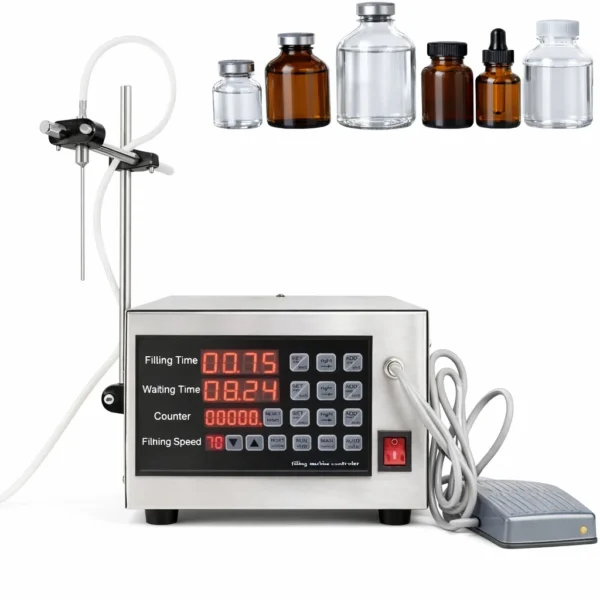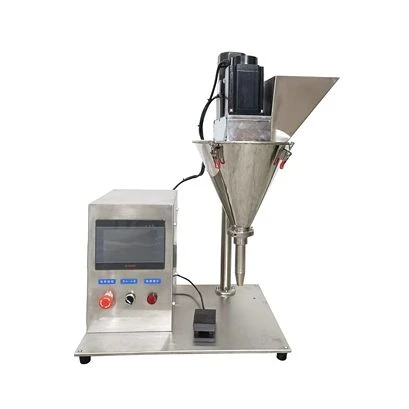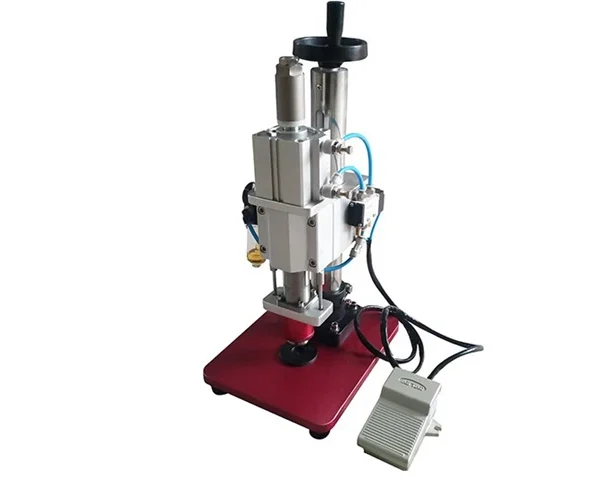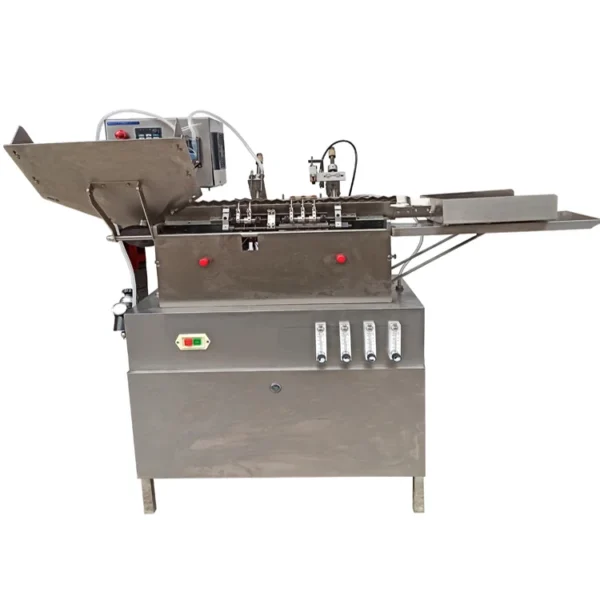
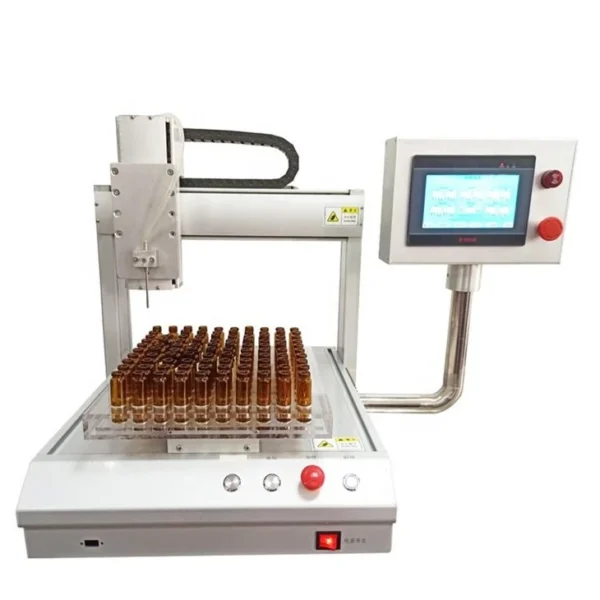
Ampoule Filler

To sum up, the Ampoule Filler includes automatic and semi‑automatic types for filling and sealing ampoules. With stable performance, easy maintenance and flexible capacity options, this equipment lowers contamination risks and improves production efficiency. It serves pharmaceutical, cosmetic, chemical, food and other industries, and our factory provides reliable one‑stop service for global customers.

Description

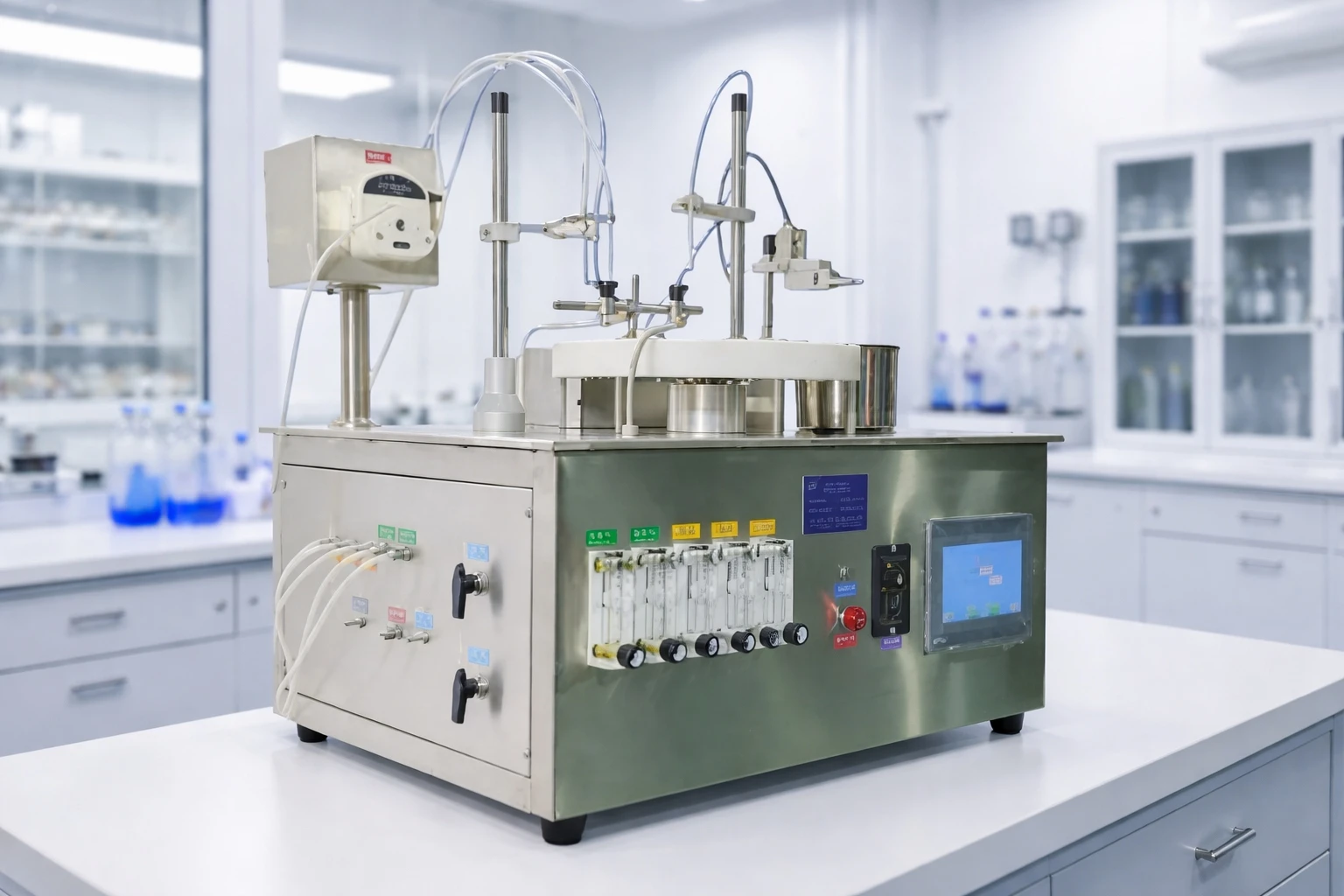
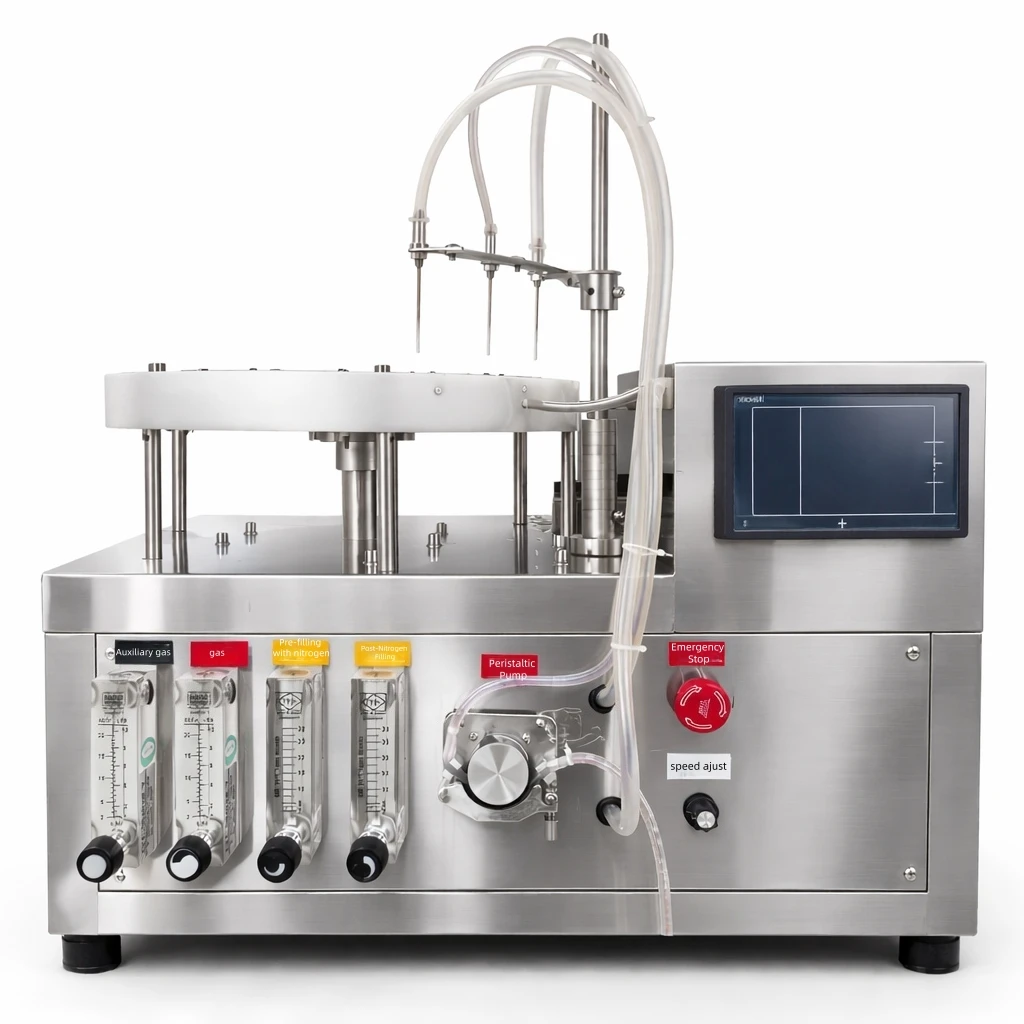
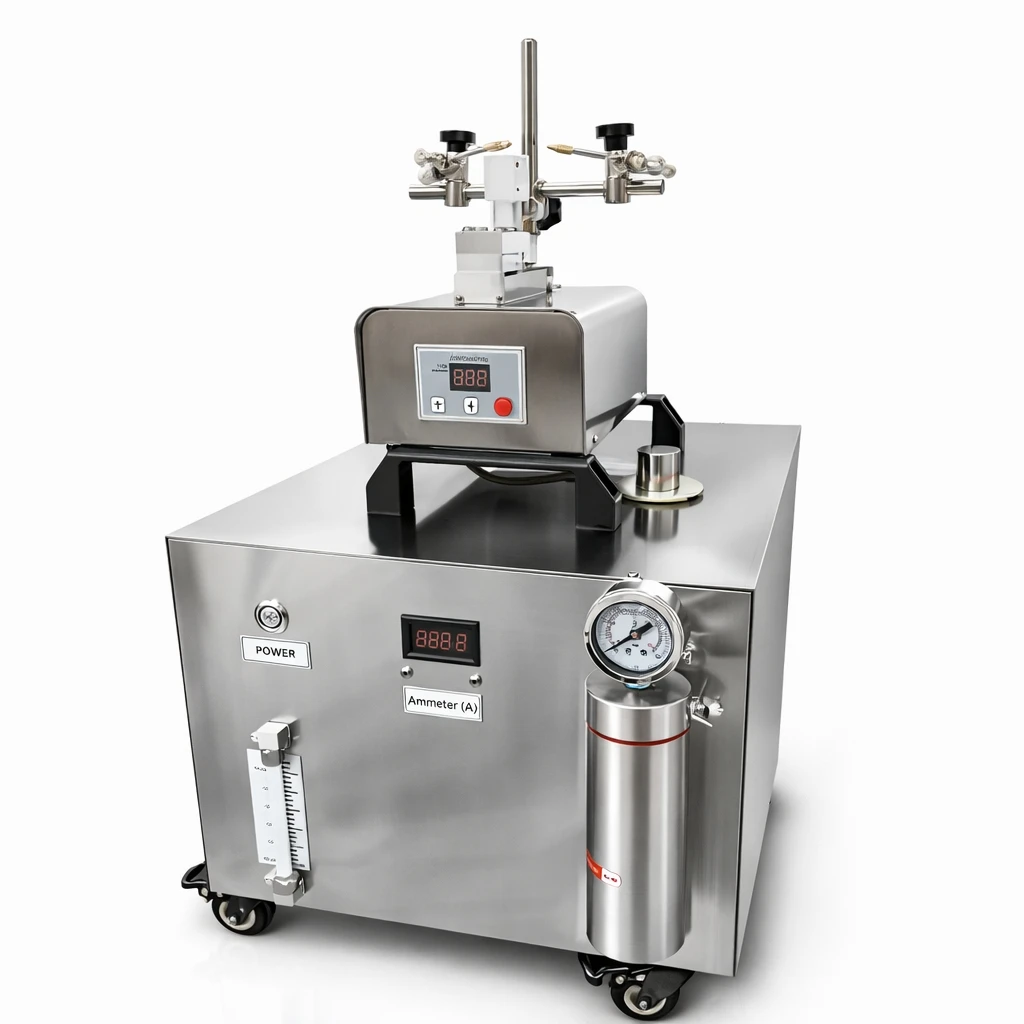
An ampoule‑filling machine is special equipment. It fills a set amount of liquid or powder into ampoule bottles. This machine includes several main parts: filling‑sealing head, material hopper, conveyor belt and control system. The filling‑sealing head measures material volume and fills ampoules accurately. The hopper stores plenty of raw materials. Materials move to the conveyor belt and are divided into single doses. The control system watches and adjusts conveyor speed, filling work and sealing‑head operation.

Benefits of Ampoule Filler

  • Easy Accessibility & Maintenance
Reliable manufacturers help you pick suitable machines for your business. These machines bring good performance and simple operation. They need little daily maintenance and fit many different production tasks.
  • Varying Capacities
Two‑head ampoule filler‑sealer works well for small‑batch production. Eight‑head ampoule filler suits medium and large factories. Its simple control panel and adjustable capacity make production easy.
  • Sturdy Structure for Long‑Lasting Durability
This machine has a strong, space‑saving frame. It gives precise results without taking too much workshop space. High‑quality materials allow it to keep great performance for years.
  • Protects the Filled Material
This machine keeps dust and other dirty particles out of ampoules during filling, and the reliable Ampoule Filler well protects your filling materials from external pollutants.

Why Choose Us

  • One‑stop Service
We give fast replies, reasonable prices, good product quality and complete after‑sales support.
  • Customer Satisfaction
We offer high‑quality service to meet and exceed customer expectations. We work closely with clients and try our best to satisfy all their practical needs.
  • Competitive Pricing
We keep prices low without lowering product quality. All our prices are open and clear, with no hidden extra fees.
  • Quality Assurance
We follow strict quality‑check rules. Our professional inspectors test every machine carefully before delivery.
  • Expertise and Experience
Our team has rich work experience. We hire skilled workers to deliver good‑quality products for every customer.
  • Customer Service
We finish projects on time and stay within your budget. Great customer service builds our good market reputation.

Filling Principle & Features of Ampoule Filling Lines

Ampoule filling lines belong to pharmaceutical‑processing machines. They fill and seal ampoule bottles. These compact machines keep steady filling and sealing results. They safely hold liquid or powder medicine for storage and transport. Below are their key features and advantages.
  • Working Principle of Ampoule Filling Lines

Ampoule filling lines use stainless‑steel square‑tube frames and stainless‑steel outer covers. Large openings make cleaning simple. The filling unit carries a hanging control panel. You can take it down for easy cleaning.

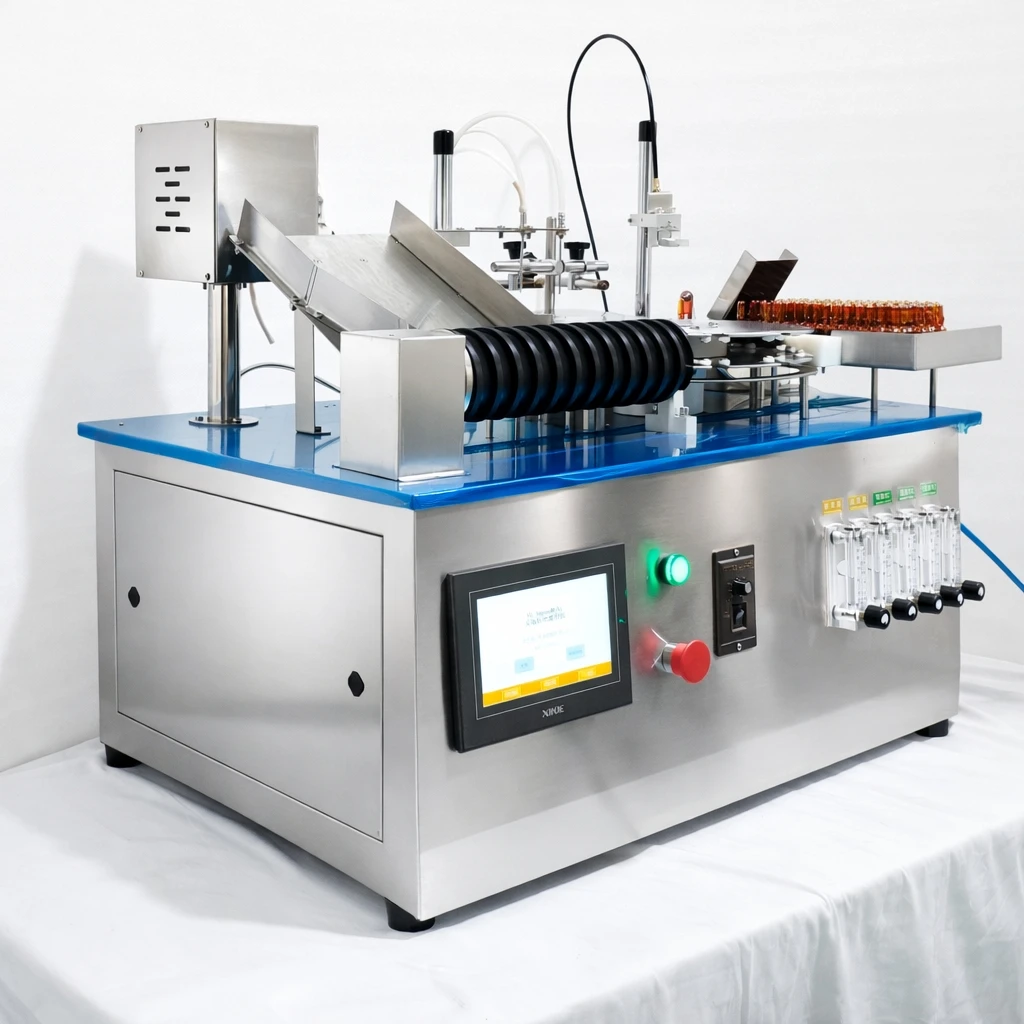
Before filling, workers sterilize ampoule trays and place ampoules into a slanted hopper. Synchronized star wheels push ampoules onto an eccentric rack.

A wire‑mesh conveyor moves ampoules to the receiving rack. Ampoules tilt at a fixed angle. Needles inject exact liquid volume into each bottle. Then ampoules travel to the sealing station. Machines finish pre‑gas filling and pre‑heating. Stainless‑steel trays support final sealing work. Finished sealed ampoules collect in stainless‑steel trays.

You can connect this production line to your existing machines for easy upgrade. The slant‑moving design lets ampoules move at a correct tilt angle. Operators can watch and adjust working parameters to keep proper medicine concentration.

This machine fills liquid or powder and seals bottles mechanically. It can also fill protective gas inside ampoules to keep contents sterile. One machine finishes both filling and sealing steps.

  • Compact Ampoule Filling Lines

Ampoule filling lines and vial filling lines are compact devices for sterile pharmaceutical production. They support many set‑up choices. Key advantages include small body size, sterilization function and clean working systems.

This line uses an intermittent rotary filling unit. It fills and seals different ampoules. It works for open‑mouth, closed‑mouth ampoules and vials, and fits many packing materials.

The compact ampoule filling line runs efficiently and processes many ampoules every hour. It uses slant‑transport structure and fits ampoules with different neck sizes. It carries a hot‑air circulating dryer for sterilization. It fully meets standard industry rules.

  • Ampoule Filling Lines Keep Stable Production Quality

Every working step must stay steady for good output. The filling area must stay very clean. Workers can add inert gas during filling to avoid pollution. Then machines heat ampoules and complete heat sealing.

Ampoule filling is a careful job and needs professional equipment. Modern automatic machines keep high precision during production. They support product weight checking and laser sealing. For pharmaceutical factories, these machines cut costs and raise work efficiency. Exact filling also reduces raw‑material waste.

  • The Bottom Line
Ampoules are small glass bottles for liquid and powder medicine. They greatly change the pharmaceutical industry. They block dust and air to keep medicine pure. People once used ampoules to store blood samples. Today factories widely use them for safe medicine storage and transport. Ampoule filling lines put liquid or powder medicine into ampoules. All equipment must follow strict safety standards for medicine protection.

Types of Ampoule‑filling Machines

Pharmaceutical factories need ampoule‑filling machines to put sterile liquid into ampoules. These machines ensure precise filling and lower pollution risk. Two main types exist: automatic ampoule‑filling machines and semi‑automatic ampoule‑filling machines.
  • Automatic Ampoule Filling Machines
Automatic ampoule‑filling machines are high‑level pharmaceutical equipment. They provide great filling accuracy. They have bottle auto‑indexing, closed‑loop control, adjustable‑speed drives and precise measuring systems. High‑speed bottle conveyors raise total output. They fill both big and small ampoules quickly and correctly.
  • Semi‑Automatic Ampoule Filling Machines
Semi‑automatic ampoule‑filling machines enjoy wide use in pharmaceutical workshops. They work well for small and medium‑size ampoules. Workers manually set bottle positions. Adjustable‑speed drives and measuring systems guarantee correct filling. They offer stable and repeatable filling results.
  • Advantages of Using Ampoule Filling Machines
Ampoule‑filling machines reduce operating mistakes and improve filling accuracy. Automatic models use closed‑loop control and adjustable‑speed drives for better precision. They increase production volume and shorten machine‑stop time. Semi‑automatic machines deliver steady, repeatable filling performance. They replace manual filling work and lower contamination risks.
  • Conclusion
Ampoule‑filling machines play an important part in pharmaceutical production. They fill sterile liquid into ampoules accurately. Automatic machines carry bottle auto‑indexing, closed‑loop control, adjustable‑speed drives and measuring systems. Semi‑automatic machines serve small‑medium ampoules and see wide practical use. These machines cut errors, raise accuracy and reduce pollution risks.

Ampoule Filling and Sealing Machine

  • How Ampoule Filling and Sealing Machine Works

Ampoule filling‑sealing machines are key pharmaceutical devices for injection‑liquid processing. They also serve chemical, biotech, cosmetic and agricultural industries. Factories make standard‑version machines or build custom‑made units for clients. They fit open‑mouth, closed‑mouth and onion‑skin style ampoules.

This machine works based on slant‑transport principle. It handles ampoules with different neck sizes, wall thickness and oval bottle shapes.

  • Filling Materials
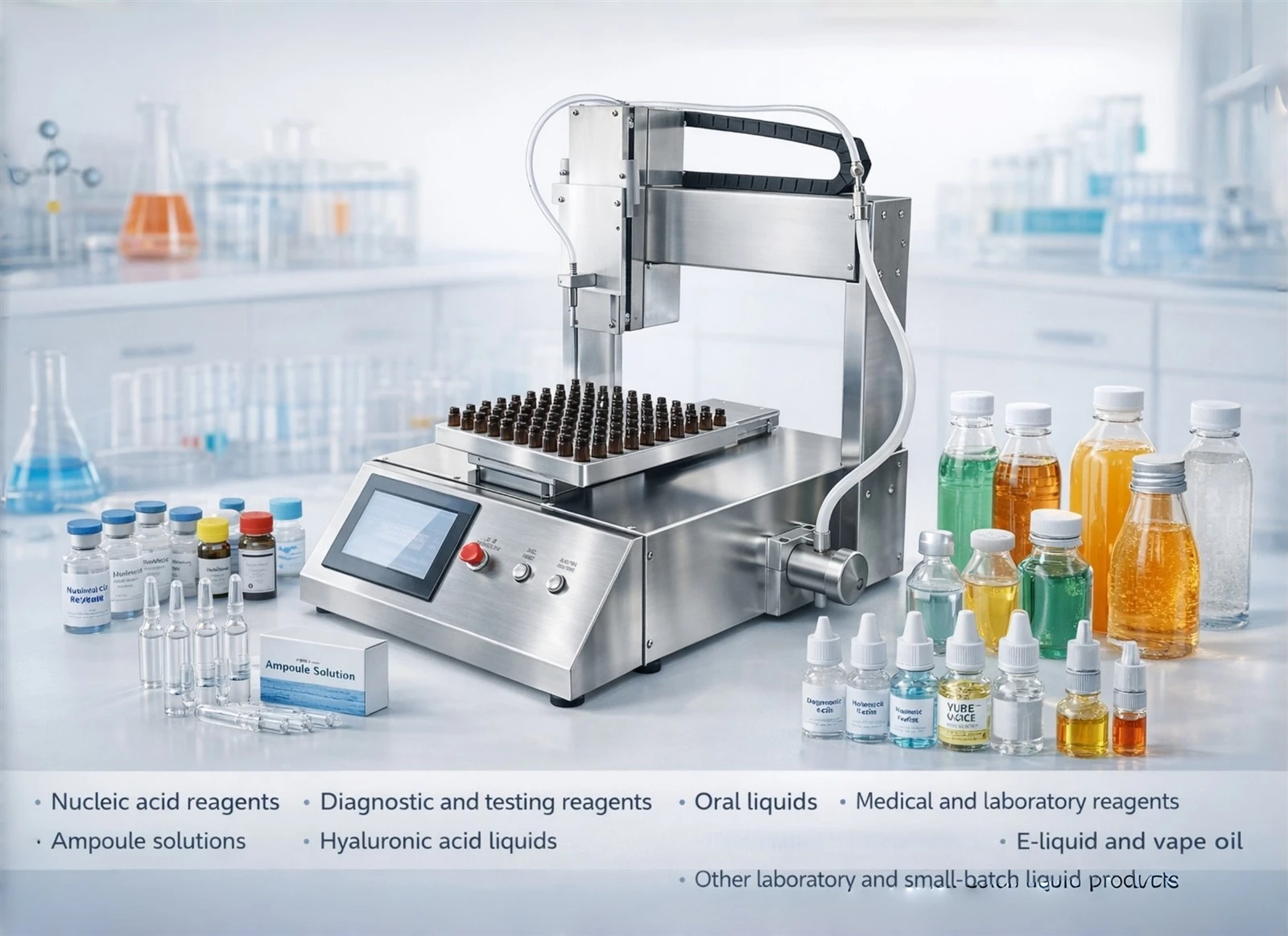
This machine fills many kinds of glass ampoules with different‑volume liquid. It processes air‑sensitive reagents and injectable medicine. It fills and seals easily‑polluted liquid right away to prevent contamination.
  • Operating Procedure

Workers sterilize ampoules and place them on trays. Then they put trays into the machine’s slanted hopper. The machine starts running. Synchronized star wheels feed ampoules one group at a time. Groups can include one, two, four or six bottles.

Racks stop at each station. The machine finishes pre‑gas filling, liquid filling, post‑gas filling, pre‑heating and sealing step by step. Sealed ampoules collect on trays without human touch. Proven reliable technology supports all production steps. This equipment is essential for pharmaceutical and related industries.
What is The Purpose And Use of Ampoule Filling Machine

Many factories and labs use ampoule filling‑sealing machines. Common manual filling cannot always get good results. This special machine fills and seals different‑size ampoules. It connects with ampoule necks and injects required liquid volume. Then it seals bottle necks. Sealing keeps air and dirty particles outside ampoules during filling.

Ampoule bottle material decides filling ways and sealing requirements. Pharmaceutical plants widely use ampoule fillers. They process gel, resin, powder and oil‑based products. Users must choose suitable filler models for their materials.

Why You Should Buy Ampoule Filling Sealing Machine

If you need more than simple sealing function, choose commercial‑grade ampoule filling machines. They produce large batches of ampoules and speed up medicine packing. They help lower overall packaging costs.

Think about machine capacity when you buy commercial equipment. You also need to match machine performance with your medicine’s real demands. Calculate your monthly or yearly output to pick proper capacity. Sometimes high‑end multi‑function machines bring better long‑term value.

Ultrasonic filling machines are popular today. Ultrasonic waves create vibration and make gel‑type materials foam. Foam sticks firmly to ampoule necks without spilling. Ultrasonic sealing works for drug production, cosmetic making and medical‑beauty treatment.

Ampoule Filling Machine Applications

  • Pharmaceutical Industry
Pharmaceutical‑grade ampoules are very common. They protect medicine from outside damage. Ampoule filling machines perfectly meet pharmaceutical production demands.

Pharmaceutical Industry

  • Food Industry
Food factories need automatic filling tools. Ampoule‑filling equipment handles liquid food, cuts spilling loss and supports easy storage.

Food industry

  • Cosmetic Industry
Cosmetic products come in many styles and sell in large quantities. Cosmetic ampoule‑filling machines help manufacturers finish mass production and meet market stock demands.

Cosmetic Industry

  • Chemical Industry
Chemical factories rely heavily on ampoule filling‑sealing machines. Many chemical materials are dangerous. Automatic filling‑sealing equipment protects workers during filling and transport.

Chemical Industry

Summary

To sum up, the Ampoule Filler includes automatic and semi‑automatic types for filling and sealing ampoules. With stable performance, easy maintenance and flexible capacity options, this equipment lowers contamination risks and improves production efficiency. It serves pharmaceutical, cosmetic, chemical, food and other industries, and our factory provides reliable one‑stop service for global customers.

Reviews

There are no reviews yet.

Be the first to review “Ampoule Filler”

Your email address will not be published. Required fields are marked *

GMP Compliant Design
Comply with GMP standards, featuring easy-to-clean surfaces and validation-ready documentation.
On-Time Delivery
Reliable lead times for standard and custom equipment, supporting your production launch without delays.
Professional After-Sales
Global technical support and on-site installation/training to ensure long-term stable operation.