

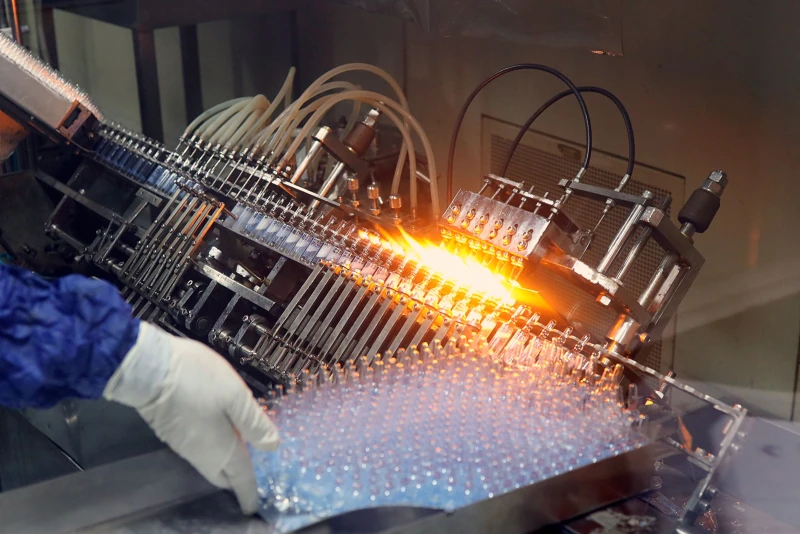
I. What is a Syringe Filling Machine
A syringe filling machine is a special aseptic equipment for the pharmaceutical industry. It fills liquid medicine into pre-filled syringes and presses rubber plungers automatically in one continuous process. Factories widely use it to make vaccines, biological drugs, cosmetic solutions and eye drops.
Common liquid filling machines work for vials and ampoules. They lack Class A laminar flow aseptic protection. They cannot fit pre-filled syringes well. Their filling accuracy and particle control are not good enough.
This machine strictly follows GMP rules. It runs fully automatically in controlled clean rooms. It can fill tiny liquid volumes with high precision. It keeps microbes and tiny particles under tight control. It is the core production machine to make sterile pre-filled syringe drugs in large batches.
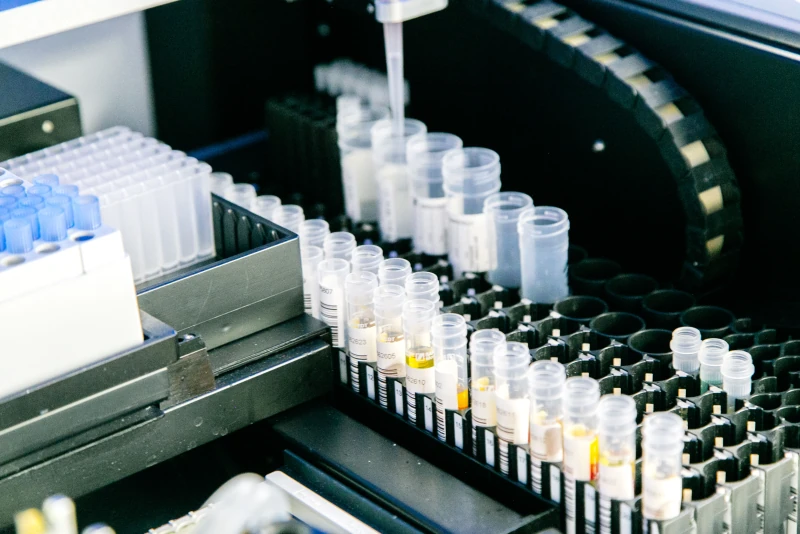
II. Working Principle and Key Operation Points of Pre-filled Syringe Filling Machines
The pre-filled syringe filling machine uses cam indexing or servo continuous drive systems. It finishes all aseptic work inside the clean area protected by Class A laminar flow.
The full process goes in this order: feed pre-filled syringes → siliconize the inner syringe wall → fill fixed liquid volume → press rubber plungers → run online tests → remove bad products → send out finished syringes.
The machine uses piston pumps or peristaltic pumps to measure liquid accurately. Positioning clamps keep syringes in perfect center alignment. Filling and plunger pressing work together. They shorten the time liquid touches open air and lower microbial contamination risks.
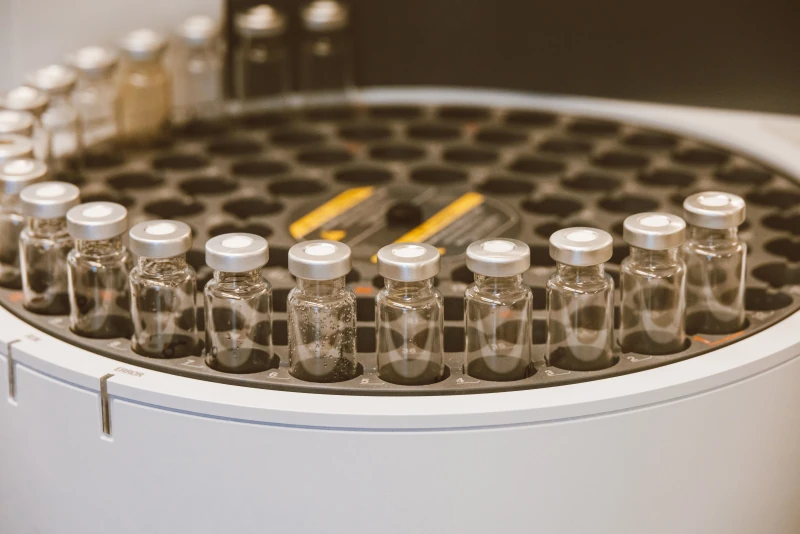
Key operation points:
- Complete DQ/IQ/OQ equipment qualification before production. Make sure laminar flow, pressure difference and particle levels meet GMP standards.
- Clean and sterilize liquid delivery tubes by CIP/SIP to stop cross-contamination.
- Control filling speed and plunger pressure carefully. Avoid liquid splashing, stuck plungers or broken syringes.
- Watch filling volume deviation in real time. Use online weight checks and reject products with wrong doses.
- Clean the clean room after production. Keep full records of machine runs and environment checks.
III. Core Advantages of High-precision Pre-filled Syringe Filling Machines for Sterile Drug Production
The pre-filled syringe filling machine uses servo indexing drive systems. It runs continuous sterile production under Class A laminar flow protection.
Full process: feed and sort pre-filled syringes → siliconize inner walls → measure and fill liquid → press rubber plungers → online vision inspection → remove defective goods → output finished products.
The machine uses peristaltic pumps or ceramic metering pumps to fill liquid with fixed volume. Tool clamps keep syringes aligned. It cuts liquid exposure time and controls particle and microbial risks.
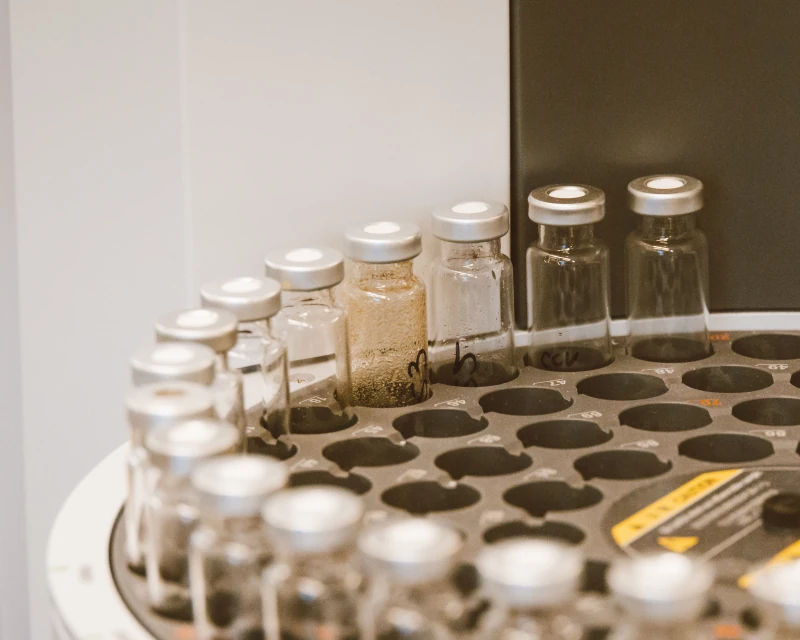
Key operation points
- Complete DQ/IQ/OQ equipment qualification before starting work. Check clean room pressure and suspended particles to meet GMP.
- Use CIP (Clean-in-Place) and SIP (Sterilize-in-Place) for liquid tubes to prevent cross-contamination.
- Adjust filling speed and plunger pressure accurately. Stop liquid splashing, stuck plungers and cracked syringes.
- Monitor filling weight online and automatically reject out-of-spec products.
- Clean the clean room after work and retain original records of environment and machine operation.
IV. Syringe Filling Equipment | Safety Standards and Processes for Ready-to-use Syringes
Ready-to-use pre-filled syringes are single-use sterile drug containers. Workers must operate the whole process under Class A laminar flow. Teams follow GMP sterile control rules to manage particles, microbial contamination and filling errors.
Standard process: Unpack sterile incoming materials and run incoming inspection. Check syringe completeness and even siliconization. The machine sorts and feeds syringes under laminar flow. No people touch parts that contact liquid medicine. The ceramic metering pump fills liquid and monitors volume errors in real time. The servo plunger unit controls pressing force precisely to keep good sealing. Online vision and weight checks automatically remove defective products.
Safety control: Use CIP/SIP to clean and sterilize liquid tubes. Complete DQ/IQ/OQ machine qualification before production. Keep monitoring clean room pressure, floating particles and settling bacteria. Shorten open liquid exposure time to avoid cross-contamination.
V. Core Functions of Syringe Filling Machines for Aseptic Pharmaceutical Production
Aseptic pharmaceutical syringe filling machines meet GMP and sterile drug production requirements. The machine uses servo indexing drive structures. It automatically sorts syringes, siliconizes, fills liquid by volume, presses plungers with servo power, runs online vision checks and rejects bad items. Less human contact means lower microbial contamination risk. The ceramic metering pump controls filling tolerance well. It works for tiny-volume sterile drugs. Modular tooling allows fast changeover to fit many sizes of pre-filled syringes.
All tubes touching liquid support CIP/SIP cleaning and sterilization to avoid cross-contamination. The HMI touch screen saves batch production data and supports audit trails. The machine can complete full DQ/IQ/OQ validation. It can work with Class A laminar flow or isolation systems to protect clean environments. It fits mass production of biologics and vaccines.
VI. Full Product Series Introduction for Syringe Filling Machines
We split syringe filling machines into three groups by output, structure and clean configuration: semi-automatic models, intermittent servo filling integrators and continuous filling machines with isolation systems.
- Semi-automatic syringe filling machines suit research labs and small trial batches. People load and unload materials manually. They carry ceramic metering pumps. Researchers use them to test drug formulas and explore process parameters for process validation.
- Intermittent servo integrated machines are the main model for mass production. They use servo cam indexing structures. They combine automatic sorting, siliconization, filling, plunger pressing and online inspection. Modular tooling supports fast changeover. They work for pilot tests and large-scale production and meet GMP compliance.
- Machines with isolation systems connect to Class A sterile isolators. They greatly lower risks of microbial entry. Factories use them for high-potency drugs, biological products and vaccines that need strict protection. All parts touching liquid medicine across the whole series support CIP/SIP. All machines can finish DQ/IQ/OQ validation. They cover the full production cycle from lab research, pilot scale-up to commercial sterile drug manufacturing.
VII. Ready-to-use Syringe Filling | Analysis of Core Safe and Reliable Filling Functions
We divide syringe filling machines into three main product groups by working conditions, mechanical structure and clean settings: semi-automatic machines, intermittent servo filling integrators and continuous filling machines with isolation systems. They fully meet graded sterile drug production demands.
| Machine Type | Application Scenarios | Key Professional Configurations |
| Semi-automatic Syringe Filling Machine | Pharmaceutical research labs, small sample production, formula development and process parameter testing | Manual material loading/unloading. High-precision ceramic volumetric metering pumps. Support GMP process validation and parameter testing. |
| Intermittent Servo Filling Integrated Machine | Pilot scale-up and large commercial mass production, main machine for regular sterile drug manufacturing | Servo cam indexing drive. Combine automatic sorting, inner wall siliconization, precise filling, servo plunger pressing and online visual inspection. Fast-change modular tooling. Fully meet GMP sterile standards. |
| Continuous Filling Machine with Isolation System | High-potency APIs, biologics, virus vaccines and other high-protection sterile drug production | Built-in Class A closed sterile isolation system. Unmanned sterile work. Greatly reduce microbial entry and cross-contamination risks. |
All liquid-contact parts of the whole series use pharmaceutical-grade stainless steel. They support CIP Clean-in-Place and SIP Sterilize-in-Place. They support complete DQ/IQ/OQ machine validation systems. They cover the full production chain of pharmaceutical R&D, pilot scale-up and commercial mass production.
VIII. Detailed Technical Parameters of Ready-to-use Filling Machines
Ready-to-use filling machines are special automatic process equipment for sterile pharmaceutical work. They suit pre-sterilized ready-to-use vials, pre-filled syringes, pharmaceutical cartridge bottles and single-use sterile plastic containers. They automatically fill sterile liquid with high precision, align containers by servo control, stop liquid dripping and prevent stringing. The machine design follows GMP and FDA sterile production rules. It works for sterile preparations, biological products, vaccines, eye drops and cosmetic preparations. It offers standard technical support for equipment selection, process validation and GMP compliance acceptance.
8.1 Core Filling Accuracy Parameters
The machine carries a servo ceramic pump closed-loop metering system. Its measurement performance meets volume variation rules in Chinese Pharmacopoeia. Filling range covers 0.1mL~100mL. Standard machines work from 0.2mL to 50mL. We accept custom designs for special volumes. The machine uses graded accuracy control: for volume ≤1mL, error ≤±1.0%; 1mL~10mL, error ≤±0.5%; over 10mL, error ≤±0.3%. RSD of continuous filling batches ≤0.5%. It keeps high repeatability and stable process performance.
Operators adjust parameters on the HMI screen without taking the machine apart. Users can switch to peristaltic pump modules for shear-sensitive liquid medicine. The filling head uses negative pressure suck-back to stop liquid stringing and secondary bottle mouth pollution. We calibrate the machine with purified water at 20℃ and normal air pressure. It adapts to small changes of liquid temperature and viscosity and keeps stable filling precision.
8.2 Container Compatibility Parameters
This machine has strong flexible production ability. It works with 2R~30R sterile vials, 0.5mL~10mL pre-filled syringes, pharmaceutical cartridge bottles and many ready-to-use plastic containers. It fits container outer diameter 6mm~32mm, height 30mm~140mm. It works with Type I borosilicate glass and COC/COP medical polymer packaging materials. It uses servo alignment plus star wheel clamping structure. Repeated positioning error ≤±0.1mm. It effectively prevents off-position filling, missing filling and empty filling. Changeover is fast. Change time for one product ≤30 min. The machine saves many groups of process recipes. It meets flexible production needs for many products and small batches.
8.3 Running Speed and Capacity Parameters
We make three machine grades: pilot, standard mass-production and high-speed mass-production. They cover lab tests, pilot scale-up and industrial mass production. Pilot machines: 30~80 pieces per minute. Standard machines: 80~200 pieces per minute. High-speed machines: 200~300 pieces per minute. Custom multi-channel machines can reach 400 pieces per minute. The whole machine uses PLC stepless speed control. It adjusts running parameters according to liquid flow features and container sizes. It has full process interlock logic: no bottle, no filling; stop for missing bottles; emergency stop for jammed bottles; sound and light alarms for abnormal states. It supports 24-hour stable continuous production. Machine utilization ≥98%. Its automation level meets demands of sterile production lines.
8.4 Machine Material Parameters (GMP Aseptic Grade)
The machine clearly separates liquid-contact and non-contact parts. Parts touching liquid medicine use 316L medical stainless steel, high-purity alumina ceramic, PFA, PTFE and USP Class VI medical silicone rubber. These materials absorb almost no medicine, release no harmful substances and resist repeated sterilization. The frame and outer cover use 304 stainless steel. Surface roughness Ra ≤0.4μm for liquid-contact surfaces; Ra ≤0.8μm for outer surfaces. No dead corners for bacteria growth. All seals stand repeated 121℃ steam sterilization. They resist aging and leaking for long-term GMP clean room production.
8.5 Sterile Grade and Clean Validation Parameters
The core filling area has ISO 5 Class A laminar flow protection. The whole machine works inside Class B clean rooms. It carries CIP Clean-in-Place and SIP Sterilize-in-Place. It works under 121℃ and 0.12MPa to fully sterilize cavities. Users can add RABS restricted access barrier systems to lower cross-contamination risks between people and products. Inner cavity bioburden <10 CFU per unit. The machine supports full DQ/IQ/OQ/PQ validation. Production data supports audit trails and cannot be changed. It fully meets GMP and FDA data compliance rules.
8.6 Liquid Viscosity Compatibility Parameters
The machine works for liquid viscosity 0.5mPa·s~10000mPa·s. It covers low-viscosity water-based liquid, medium-viscosity protein biological liquid and high-viscosity suspensions and gels. For high-solid and high-viscosity liquid, it uses high-torque delivery modules and anti-stringing filling needles. It solves sticking, incomplete filling and liquid stringing. For large-molecule biological liquid, it uses low-shear delivery to protect drug activity and avoid molecular damage.
8.7 Auxiliary Technical Parameters
The machine uses 380V±10%, 50Hz three-phase power. Rated power ranges from 4kW to 18kW. It works with clean oil-free compressed air at 0.5~0.7MPa. Air consumption: 0.2~0.6m³/min. It comes with 5L/20L/50L sterile tanks. Users may add temperature jackets, liquid level monitoring and anti-sediment modules. Working environment: temperature 18~26℃, relative humidity 40%~65%. It has self-diagnosis alarms for wrong filling volume, jammed containers and pressure errors. It rejects bad products automatically. It connects with auto feeding, stoppering, capping, code marking and online weight check machines to build full automatic sterile filling production lines.
IX. Application Scenarios of Small-batch Custom Product Series
Small-batch custom tabletop ready-to-use filling machines are light-weight special sterile filling machines for pharmaceutical R&D tests, sample submission, clinical trials and small commercial orders. Compared with large high-speed production lines, these machines have flexible adaptation, fast changeover, low liquid waste, simple validation and small footprint. They solve the pain points of large production lines: large minimum batch size, high changeover cost, high material waste and poor fit for new product process tests. They suit widely in pharmaceutical R&D centers, CRO/CDMO organizations and cosmetic labs for multi-product, small-batch and frequent changeover production.
New drug R&D and formula test scenarios
The machine supports tiny-volume liquid tests. Operators adjust filling volume, flow speed and negative suck-back parameters in real time without heavy tool changes. Its simple pipe design leaves very little leftover liquid. It saves expensive raw materials such as new drugs and biological liquid. It works for formula screening and process validation of sterile drugs, biological products and traditional Chinese medicine preparations. It greatly cuts trial costs for R&D.
Sample submission and clinical trial scenarios
The machine has Class A laminar flow protection. It builds a local sterile production space without rebuilding large clean rooms. It saves and traces all production parameters. Filled products have consistent volume and quality. It fully meets sterile quality and GMP compliance standards for drug submission and Phase I / II clinical samples. It supports compliant small-batch sample production.
Small-batch commercial production scenarios
For rare specialty drugs, custom cosmetic preparations and limited special preparations, the machine finishes flexible compliant production. These products have many types, small batch sizes and frequent changeover. Large production lines cost too much to start and waste capacity. This machine finishes changeover within 30 minutes. It saves many process recipes and switches with one click. It runs multi-product batches efficiently. It avoids high start-up costs of mass lines and balances product quality and economic benefit.
Special dosage form and contract manufacturing scenarios
The machine works for shear-sensitive biological liquid and high-viscosity suspensions and gels. It uses low-shear delivery to protect drug activity and stop liquid stringing and incomplete filling. It fits vials, pre-filled syringes and cartridge bottles. It is easy to operate and needs simple validation. It meets diverse custom demands for sample testing and small batch contract manufacturing at CRO/CDMO institutes.
Overall, this series has low setup cost and low maintenance cost. It adapts well to processes. It fully meets the full small-batch production needs of new drug R&D, sample testing and special-formula mass production.
X. FAQ
Q1: What is a syringe filling machine?
It is a special aseptic filling equipment for pre-filled syringes. It follows GMP rules. You can use it alone or connect it to automatic production lines.
Q2: How does the aseptic syringe filling machine work?
Servo ceramic pumps measure liquid in closed-loop control. Star wheels position syringes. Class A laminar flow keeps the area sterile. Negative pressure suck-back plus vacuum stoppering finish filling and sealing.
Q3: What benefits do ready-to-use syringes bring?
They are pre-sterilized containers. Factories skip bottle washing and sterilization steps. They lower validation cost and cross-contamination risk. They support flexible fast changeover.
Q4: What products can the syringe filling machine fill?
It suits vaccines, biological drugs, cosmetic gels, suspensions and other sterile liquids of different viscosity levels.
Q5: What filling accuracy can we get?
It uses graded volume control. RSD of continuous filling ≤0.5%. It meets pharmacopoeia standards for volume difference.
Q6: How many syringes can the machine process per hour?
We design machines in graded models. Hourly output ranges from 1,800 to 18,000 pieces. PLC controls stepless speed adjustment.